
Cytoreductive Surgery & HIPEC in Nagpur
HIPEC (Hyperthermic Intraperitoneal Chemotherapy) is a specialised, team-based treatment approach for selected patients with peritoneal cancers (cancer spread within the abdominal lining). This page explains eligibility, the procedure, recovery, and common patient questions—so you can make informed decisions.
What Is Cytoreductive Surgery with HIPEC?
Cytoreductive Surgery with HIPEC is an advanced treatment approach used for selected patients with cancer affecting the peritoneum (the lining of the abdominal cavity). It typically includes:
- Cytoreductive Surgery (CRS): removing visible tumour deposits from the abdomen where feasible.
- HIPEC: circulating warmed chemotherapy (usually ~41–43°C) inside the abdomen for a set time to target microscopic disease.
Why HIPEC is Different
HIPEC delivers chemotherapy directly where disease is present, and heat may help chemotherapy penetration. The aim is to treat microscopic disease after maximal surgical removal of visible disease—within a carefully selected group of patients.
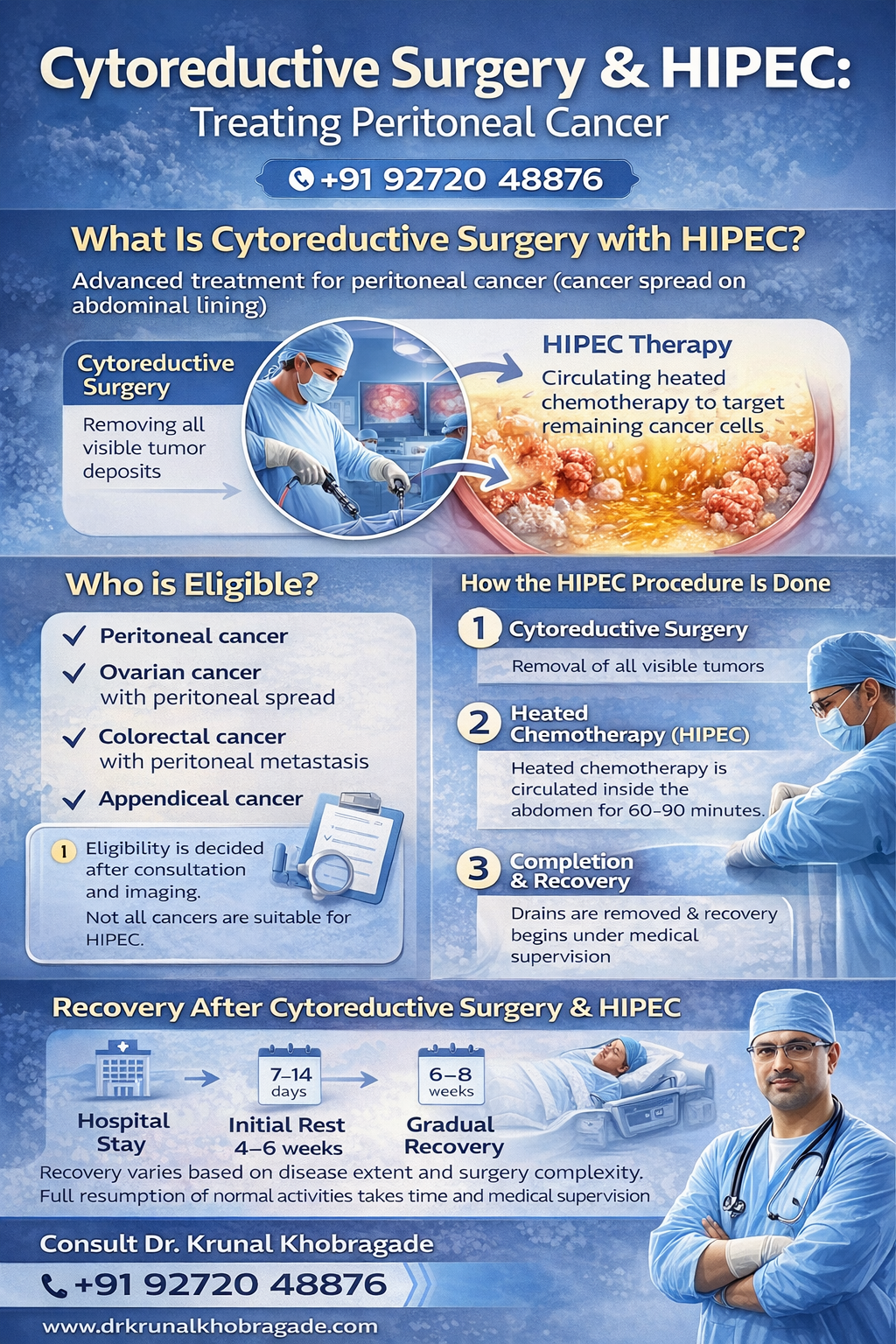
Who May Be Eligible for HIPEC?
HIPEC is usually considered after evaluation of:
- Type and origin of cancer
- Extent of peritoneal involvement (disease burden)
- Whether complete/near-complete cytoreduction appears feasible
- Overall fitness for major surgery (heart/lung/kidney function, nutrition, performance status)
- Prior treatments and response
Conditions Where HIPEC May Be Discussed
- Ovarian cancer with peritoneal spread (selected cases)
- Colorectal cancer with peritoneal metastasis (selected cases)
- Appendiceal cancers / pseudomyxoma peritonei (where applicable)
- Selected cases of other GI cancers with limited peritoneal involvement (as clinically appropriate)
How HIPEC Surgery Is Performed
HIPEC is performed in an operating theatre by a specialised multidisciplinary team. The exact technique can vary by cancer type and institutional protocol.
Before Your HIPEC Consultation (Checklist)
- Latest imaging (CT / PET-CT), biopsy report, histopathology
- Chemo / radiotherapy details (cycles, drugs, dates)
- Discharge summaries / prior operative notes (if any)
- Blood reports (CBC, kidney/liver function, tumour markers if advised)
Recovery After Cytoreductive Surgery & HIPEC
Recovery depends on disease extent, surgery complexity, and the patient’s baseline health. Many patients require careful monitoring for nutrition, bowel function, and wound healing.
Typical Recovery Milestones
- Hospital stay: commonly around 7–14 days (varies by case)
- Early recovery: gradual activity increase over 4–6 weeks
- Follow-ups: planned visits for wound review, diet guidance, and ongoing cancer care planning
Risks, Safety & What to Expect
Cytoreductive surgery with HIPEC is a major procedure. Like all complex surgeries, it can have risks. These are discussed in detail during consultation and consent.
Possible Risks (Case-Dependent)
- Bleeding, infection, fluid imbalance
- Temporary bowel slowing / ileus
- Leak risk where bowel surgery is involved (if applicable)
- Fatigue and longer recovery due to procedure intensity
A key part of HIPEC planning is selecting patients where the expected benefit outweighs the risks. Your surgeon will explain suitability and alternatives based on your clinical scenario.
Why Consult Dr. Krunal Khobragade for HIPEC in Nagpur?
Dr. Krunal Khobragade focuses on advanced surgical oncology approaches for GI and peritoneal cancers, including cytoreductive surgery and HIPEC. A consultation includes:
- Eligibility assessment (reports + imaging review)
- Clear explanation of procedure, recovery, and realistic expectations
- Multidisciplinary planning with personalised treatment sequencing
- Second opinion support if you already have a diagnosis and plan
HIPEC FAQs
Book a Consultation for HIPEC in Nagpur
If you have been told the cancer has spread within the abdomen (peritoneal disease), or you are seeking a second opinion for advanced treatment options, you can consult Dr. Krunal Khobragade for an evaluation.