

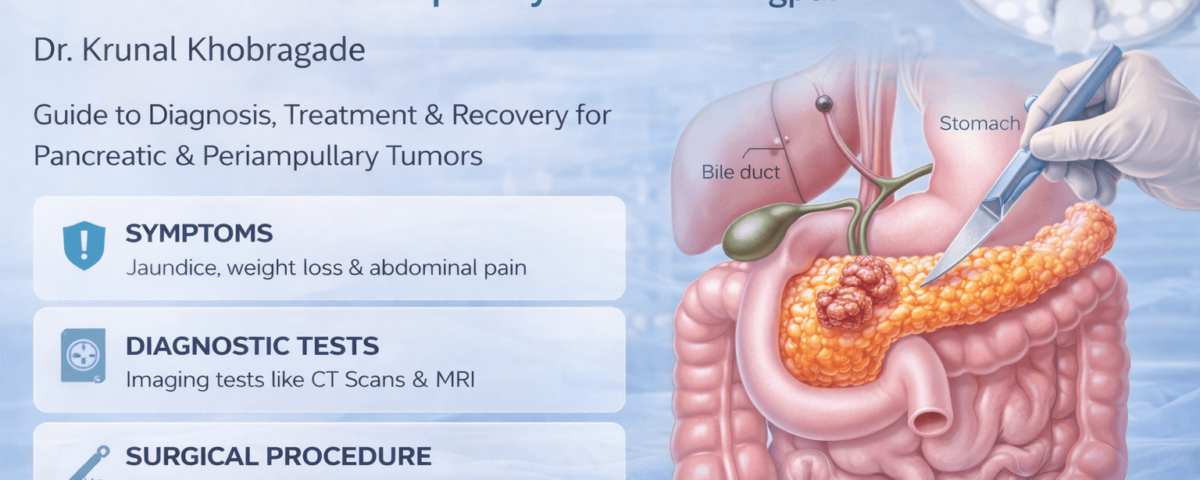
Whipple’s Surgery in Nagpur: When Is It Needed for Pancreatic and Periampullary Cancer?
Whipple’s surgery is one of the most important operations used in selected cancers of the pancreas, bile duct, ampulla, and duodenum. For patients and families, understanding why it is advised, what happens during surgery, and what recovery looks like can make the treatment journey clearer and less overwhelming.
In this blog, you will understand
- What Whipple’s surgery is and which cancers may require it
- Who may be a candidate for pancreatic cancer surgery
- How the surgery is performed and what recovery may involve
- Why early evaluation by a GI cancer surgeon matters
What is Whipple’s surgery?
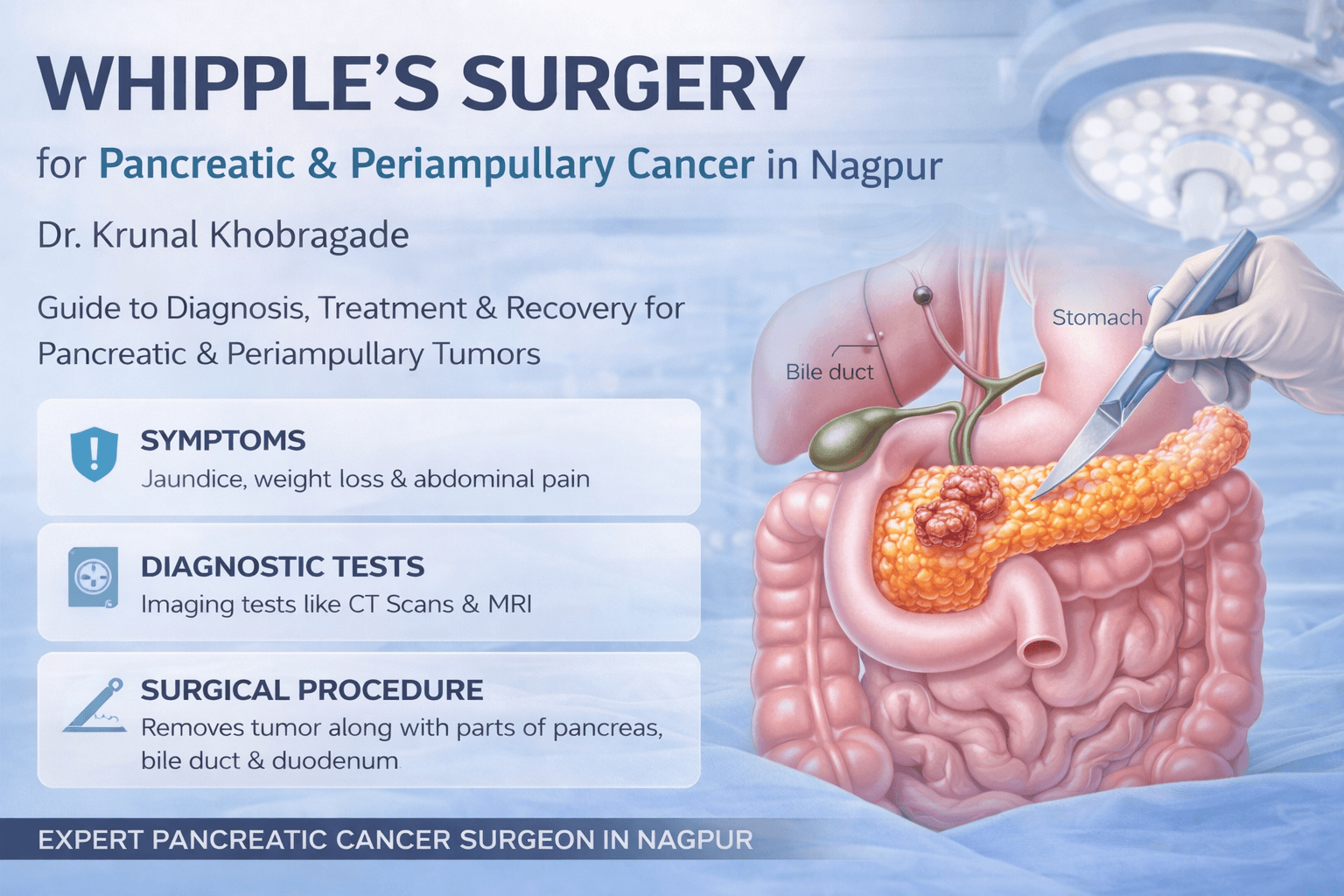
Whipple’s surgery, also called pancreaticoduodenectomy, is a complex operation performed for selected tumors and diseases affecting the head of the pancreas and nearby structures. It is most commonly discussed in relation to pancreatic cancer surgery, but may also be advised for cancers of the ampulla, distal bile duct, and duodenum.
During the procedure, the surgeon removes the diseased portion and then reconstructs the digestive tract so that food, bile, and pancreatic enzymes can continue to pass through the system in a functional way.
Important: Not every pancreatic tumor requires Whipple’s surgery, and not every patient is a suitable candidate. Careful evaluation, staging, and planning are essential before moving forward.
When is Whipple’s surgery needed?
Whipple’s surgery may be recommended when a tumor is located in the head of the pancreas or in nearby areas where removal with curative intent is possible. It may be considered in conditions such as:
- Pancreatic head cancer
- Periampullary cancer
- Ampullary tumors
- Selected distal bile duct cancers
- Some duodenal tumors
- Certain non-cancerous but serious pancreatic lesions in carefully selected patients
Why timing matters
Pancreatic and periampullary cancers can progress quietly. Delayed diagnosis may reduce surgical options, which is why prompt assessment is important if symptoms or abnormal scans are present.
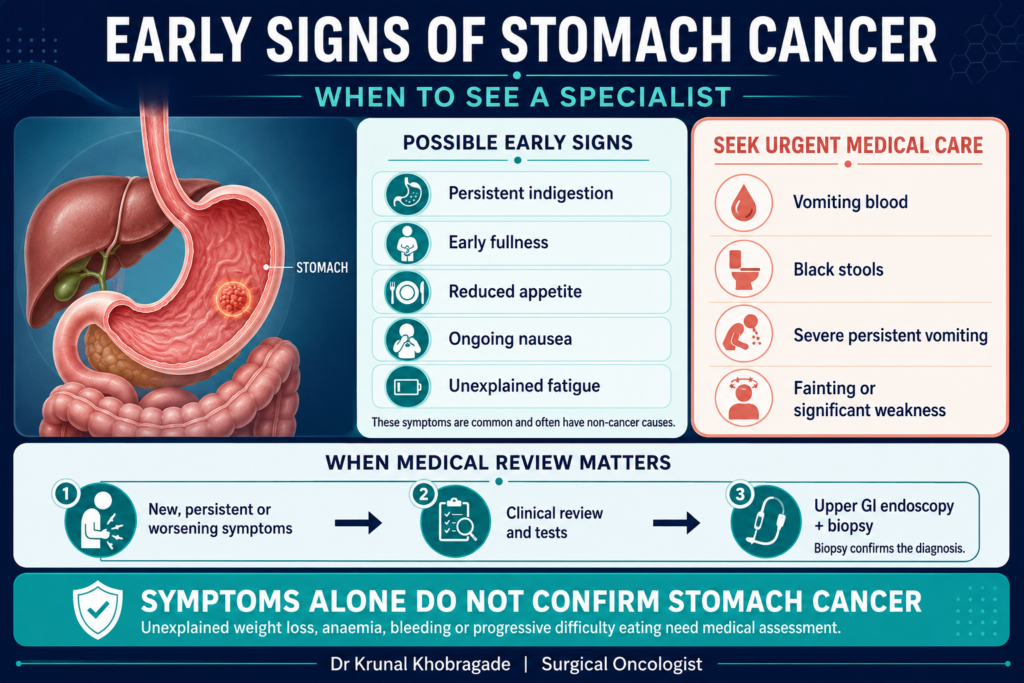
Common warning signs
Jaundice, unexplained weight loss, upper abdominal pain, poor appetite, vomiting, dark urine, pale stools, and persistent digestive discomfort may need urgent evaluation.
Who may be a candidate for Whipple’s surgery?
A patient may be considered for Whipple’s surgery after detailed clinical examination and imaging. The decision usually depends on factors such as tumor location, extent of spread, involvement of nearby blood vessels, general fitness for surgery, and overall treatment goals.
| Factor | Why it matters |
|---|---|
| Tumor location | Whipple’s surgery is mainly used for disease involving the pancreatic head or nearby structures. |
| Resectability | The surgeon evaluates whether the tumor can be removed safely and meaningfully. |
| General health | Nutrition, fitness, liver function, and other medical conditions influence surgical planning. |
| Staging results | Imaging helps determine whether the disease is localized or has spread. |
| Multidisciplinary approach | Some patients may need chemotherapy before or after surgery depending on the case. |
For many patients, the right question is not simply “Can surgery be done?” but “Is this the right sequence of treatment for my specific disease?”
What happens during Whipple’s surgery?
The surgery is planned carefully because it involves both removal and reconstruction. Although the exact extent depends on the disease, the operation may include removal of the pancreatic head, part of the small intestine, gallbladder, part of the bile duct, and sometimes part of the stomach, followed by reconstruction.
Key goals of surgery
- Remove the tumor with appropriate oncological planning
- Preserve function where safely possible
- Restore digestive continuity
- Support recovery with careful post-operative care
Because this is a major GI cancer operation, it is important that the surgery be performed after proper staging, patient selection, and perioperative planning.
Recovery after Whipple’s surgery
Recovery varies from patient to patient. Some patients recover steadily with gradual return to oral intake and activity, while others may need more nutritional and medical support early after surgery. The first few weeks are important for wound care, diet progression, hydration, pain management, and follow-up review.
Patients often want to know
- When they can start eating normally again
- How energy levels may change after surgery
- Whether weight loss is expected
- When chemotherapy might be discussed, if needed
- How frequently follow-up visits will be required
Recovery tip: Good nutrition, structured follow-up, and clear communication with the treating team play a major role in recovery after pancreatic cancer surgery.
What are the possible benefits and risks?
For selected patients, Whipple’s surgery may offer an important opportunity for disease control as part of an overall cancer treatment plan. At the same time, it is a major operation and requires informed discussion about expected recovery, possible complications, and long-term follow-up.
Potential benefits
May allow removal of localized disease, relieve blockage-related symptoms such as jaundice, and become a key part of curative-intent treatment in appropriately selected cases.
Points to discuss
Hospital stay, digestive adjustment, pancreatic leaks, infection risk, delayed gastric emptying, and the need for further treatment are some of the issues usually discussed before surgery.
When should you consult a GI cancer surgeon?
If you or a loved one has been told there is a pancreatic head tumor, periampullary growth, obstructive jaundice, or a scan suspicious for operable pancreatic cancer, it is important to seek timely surgical oncology evaluation. Early consultation can help clarify whether Whipple’s surgery, another treatment sequence, or further tests are most appropriate.
You can also explore related pages on our website such as Whipple’s Surgery in Nagpur, Robotic GI Cancer Surgery, and Cancer Surgeon in Nagpur.
Frequently Asked Questions
No. It may also be considered for selected ampullary, periampullary, distal bile duct, and duodenal tumors depending on the location and extent of disease.
Yes, it is a major GI cancer surgery and requires detailed evaluation, careful planning, and structured follow-up after treatment.
The decision depends on scan findings, tumor resectability, liver and nutritional status, general health, and the overall cancer treatment plan.
Some patients may need chemotherapy before or after surgery depending on staging, pathology, and multidisciplinary treatment planning.
Need expert evaluation for pancreatic or GI cancer surgery in Nagpur?
If you have been advised surgery for pancreatic cancer, periampullary cancer, or another GI tumor, timely evaluation can help you understand the next best step.