
Colon & Colorectal Cancer Surgery in Nagpur | Expert Surgical Evaluation by Dr. Krunal Khobragade
Colon and colorectal cancer treatment often requires careful surgical planning based on the location of the tumor, stage of disease, patient fitness, and the need for any additional therapy before or after surgery.
Patients searching for colon cancer surgery in Nagpur usually want clarity on one important question: whether surgery is needed, what kind of operation may be advised, whether a stoma will be required, and how recovery will affect daily life.
Main Focus
Colon and colorectal cancer surgery evaluation in Nagpur.
Key Goal
Clear treatment planning with safe and stage-appropriate surgical decision-making.
Common Concern
Patients often ask if they will need a stoma and how recovery may affect routine life.
Approach
Operability review, treatment sequencing, and structured follow-up guidance.
Understanding Colon and Colorectal Cancer Surgery
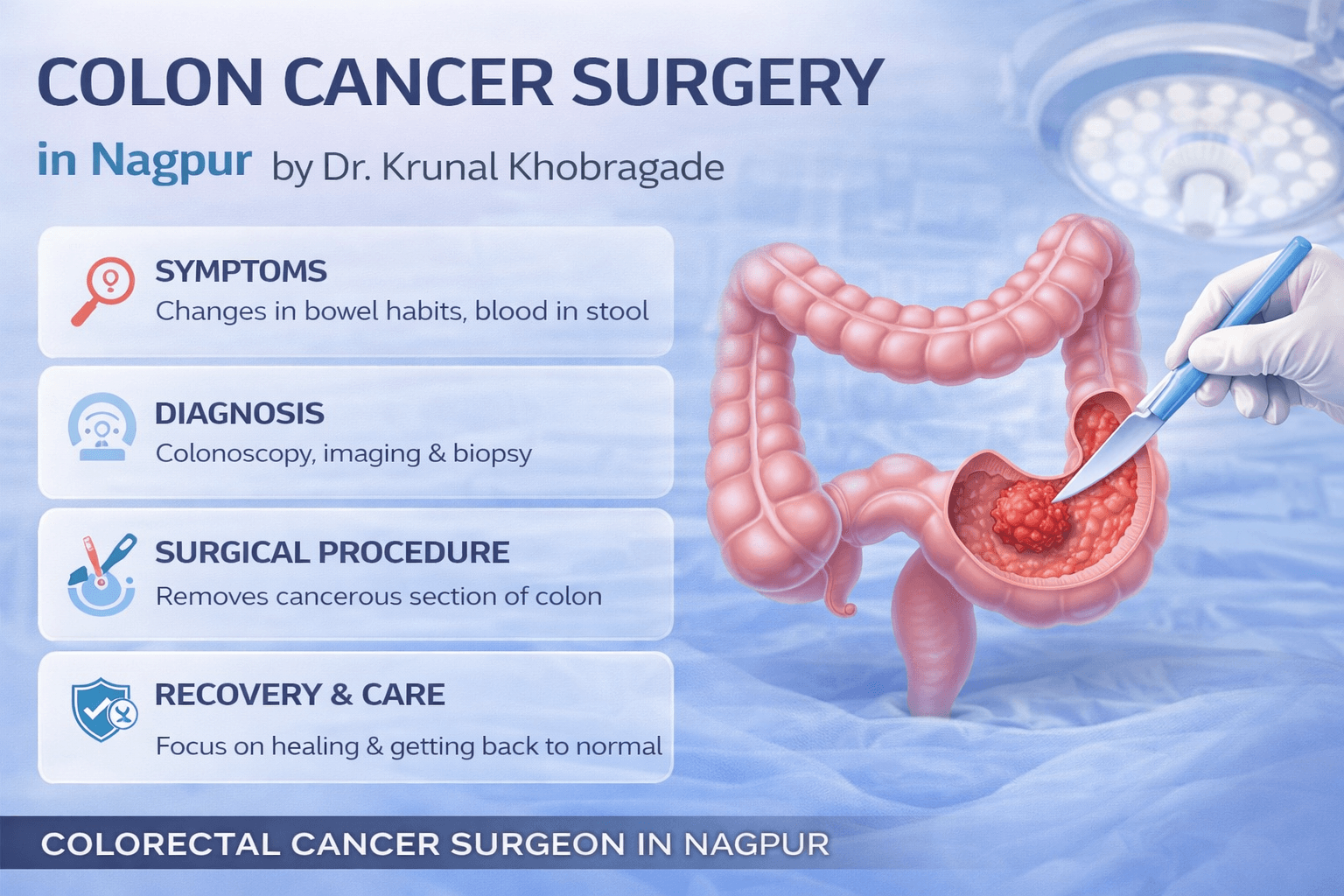
Colon cancer and colorectal cancer surgery is generally considered when the disease can be treated through removal of the affected bowel segment as part of a planned cancer treatment pathway. The exact surgery depends on where the tumor is located, how advanced it is, and whether any other treatment is needed before the operation.
Some patients present early and go directly toward surgery after staging work-up. Others may need broader treatment planning before the timing of surgery is finalized.
Common patient questions include:
- Do I definitely need surgery?
- How much of the intestine will be removed?
- Will I need a stoma bag?
- How long is recovery after colon cancer surgery?
- Will I need chemotherapy too?
When Is Surgery Recommended for Colon or Colorectal Cancer?
Surgery is commonly considered when the cancer is localized or when surgical removal is an important part of treatment. The final plan depends on stage, imaging findings, biopsy results, symptoms, and patient fitness for surgery.
Localized Disease
When the tumor appears operable and disease extent allows safe resection, surgery is often a major part of treatment.
Combined Treatment Planning
Some patients may need additional therapy in the overall treatment pathway, depending on the site and extent of disease.
The most appropriate surgical timing is decided only after proper staging and specialist evaluation.
Types of Colon and Colorectal Cancer Surgery
1) Colon Resection
In many colon cancer cases, the affected portion of the colon is removed along with appropriate margins and related lymphatic tissue as part of oncologic surgery.
2) Rectal / Colorectal Resection
When the disease involves the rectum or nearby colorectal region, surgery planning becomes more specific because of the location, bowel continuity, and functional outcomes after treatment.
3) Stoma in Selected Cases
Not every patient needs a stoma. However, in selected cases, a temporary or permanent stoma may be part of the surgical plan depending on tumor location, safety, healing considerations, and the specific procedure required.
| Surgical Situation | What It Usually Means | What Patients Usually Ask |
|---|---|---|
| Colon Resection | Removal of the affected colon segment with cancer surgery principles | How much bowel will be removed and how long recovery takes |
| Colorectal / Rectal Resection | More site-specific surgery depending on exact tumor location | Whether bowel function, control, or routine life will change |
| Stoma in Selected Cases | May be needed for healing, safety, or procedure-related reasons | Whether it is temporary or permanent and how to manage it |
How Colon Cancer Is Evaluated Before Surgery
Before colon or colorectal cancer surgery is advised, patients usually go through a complete evaluation process. This helps confirm diagnosis, define the stage, assess operability, and plan the right treatment order.
Colonoscopy & Biopsy
These confirm diagnosis and help identify the location and nature of the lesion.
Imaging Review
Scans help assess disease extent and support treatment planning.
General Fitness for Surgery
Age, nutrition, comorbidities, anemia, and bowel symptoms are reviewed carefully.
Treatment Sequencing
In some cases, the best treatment path includes additional therapy as part of overall management.
Symptoms That May Lead to Colon Cancer Surgical Evaluation
Colon cancer symptoms can vary depending on tumor location and disease extent. Some patients are diagnosed after persistent bowel changes, while others are diagnosed after bleeding, weakness, or investigation for abdominal symptoms.
- persistent change in bowel habits,
- blood in stool,
- unexplained anemia or weakness,
- abdominal pain or bloating,
- weight loss,
- loss of appetite,
- abnormal findings on colonoscopy or scans.
These symptoms do not always indicate cancer, but they should be properly evaluated if persistent or concerning.
Recovery After Colon or Colorectal Cancer Surgery
Recovery depends on the type of procedure, the patient’s condition before surgery, the complexity of the case, and whether additional treatment is planned later.
Patients often focus not only on the operation itself but also on bowel recovery, eating routine, physical activity, wound healing, and the timeline for returning to daily life.
Common recovery questions include:
- how long the hospital stay may be,
- when bowel function returns,
- when regular diet can be resumed,
- how much pain or discomfort to expect initially,
- whether a stoma needs special care,
- when further treatment decisions are made.
Do All Colon Cancer Patients Need a Stoma?
No. Not every patient undergoing colon or colorectal cancer surgery needs a stoma. The need for a stoma depends on the site of the tumor, the type of surgery required, healing considerations, safety of reconnection, and the overall operative situation.
For many patients, this is one of the biggest emotional concerns before surgery. That is why it is important to discuss the possibility clearly in advance so patients and families understand when it may be necessary and what it may mean practically.
Temporary Stoma
In some situations, a stoma may be created temporarily to protect healing and support safe recovery.
Permanent Stoma
In selected cases, a permanent stoma may be necessary depending on disease location and the surgical procedure required.
Why Patients in Nagpur Consider Dr. Krunal Khobragade for Colon Cancer Surgery Evaluation

Dr. Krunal Khobragade
Dr. Krunal Khobragade offers GI and cancer surgery evaluation with emphasis on structured planning, stage-based decision-making, and patient-centered guidance for abdominal and gastrointestinal cancers.
In colon and colorectal cancer, what patients usually need most is clarity — whether surgery is needed, what type of operation is expected, how recovery may progress, and how the larger treatment plan fits together.
GI Oncology Focus
Relevant for colon, stomach, pancreatic, gallbladder, and complex abdominal cancer pathways.
Nagpur-Based Access
Local specialty visibility helps patients and families find focused surgical cancer evaluation in Nagpur.
Need Colon Cancer Surgery Guidance in Nagpur?
If you or a family member has been diagnosed with colon or colorectal cancer and want expert guidance on surgery, staging, recovery, or a second opinion, consult Dr. Krunal Khobragade for detailed evaluation and treatment planning.
Frequently Asked Questions
Surgery is a major part of treatment for many colon cancer patients, especially when the disease is operable. However, the total treatment plan may also include other therapies depending on the stage and location of disease.
Not always. A stoma is needed only in selected cases depending on tumor location, surgical safety, healing considerations, and the type of procedure required.
The amount removed depends on the tumor location and the oncologic surgical plan. The surgeon removes the affected section with appropriate margins as part of cancer treatment.
Recovery varies from patient to patient based on the type of surgery, overall health, complexity of the case, and whether further treatment is needed later.
No. The decision depends on staging, scans, clinical condition, and the planned treatment pathway. Some patients need broader evaluation before surgical timing is finalized.
Yes. A second opinion can help patients understand surgery type, operability, stoma possibility, recovery expectations, and the overall treatment strategy.
This page is for educational purposes and should not replace individualized medical consultation.