

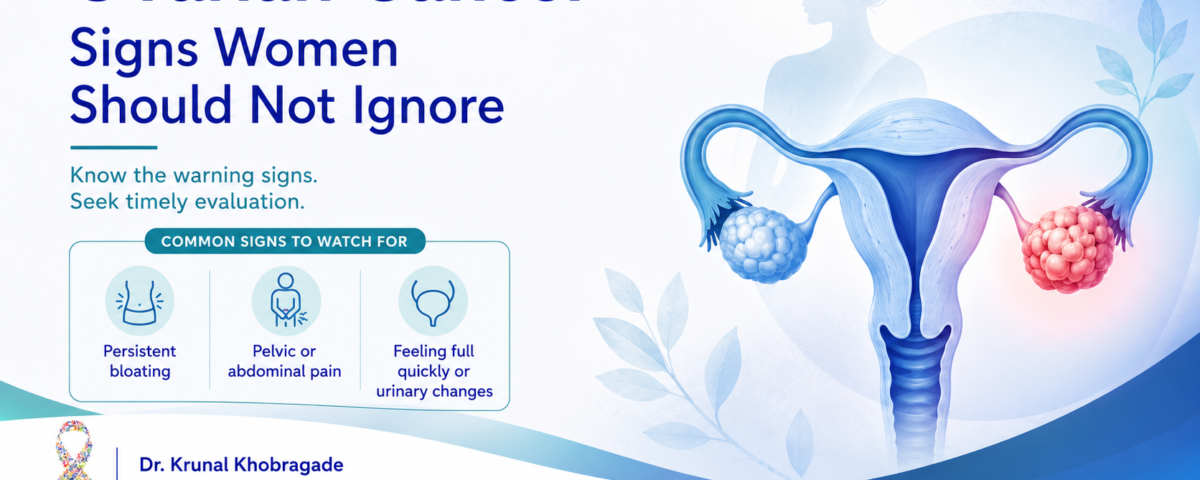
Ovarian Cancer Signs Women Should Not Ignore
Ovarian cancer does not always cause dramatic early symptoms. In many women, the first warning signs can feel vague, easily dismissed, or mistaken for common digestive or urinary problems. That is exactly why awareness matters. If symptoms are persistent, frequent, or clearly unusual for your body, it is important not to keep postponing evaluation.
In this blog, you will learn
- Which ovarian cancer symptoms women should take seriously
- Why persistent bloating is different from occasional fullness
- When pelvic pain, urinary changes, or early fullness need evaluation
- Why vague symptoms should not be ignored repeatedly
Why ovarian cancer awareness matters
One of the biggest challenges with ovarian cancer is that its symptoms may be vague and easy to brush aside. Major cancer and health authorities note that early ovarian cancer may cause few symptoms, and when symptoms do appear they can overlap with common non-cancer conditions. Commonly reported symptoms include persistent bloating, pelvic or abdominal pain, trouble eating or feeling full quickly, and urinary urgency or frequency. :contentReference[oaicite:1]{index=1}
That does not mean every woman with bloating or stomach discomfort has ovarian cancer. It means symptoms that are persistent, frequent, new, or noticeably different from your usual pattern should be taken seriously instead of being repeatedly ignored. Early diagnosis can make treatment planning more manageable and may improve how treatable the disease is. :contentReference[oaicite:2]{index=2}
Important: This blog is for awareness. It is not a diagnosis tool. Many of these symptoms can happen for reasons other than cancer, but persistent symptoms deserve medical attention.
Main ovarian cancer signs women should not ignore
The most commonly highlighted warning signs across reputable medical sources are persistent abdominal bloating, pelvic or abdominal pain, difficulty eating or feeling full quickly, and urinary symptoms such as urgency or frequency. Other possible symptoms can include bowel habit changes, fatigue, back pain, unexplained weight change, and unusual vaginal bleeding, especially after menopause. :contentReference[oaicite:3]{index=3}
1. Persistent bloating
This is one of the best-known ovarian cancer warning signs. What matters is not a single day of bloating after a heavy meal, but a repeated, ongoing sensation of abdominal swelling or a tummy that feels bigger without a clear reason. :contentReference[oaicite:4]{index=4}
2. Pelvic or lower abdominal pain
Ongoing pelvic discomfort, abdominal heaviness, pressure, or pain that keeps coming back should not be dismissed, especially if it feels new or different from usual period-related discomfort. :contentReference[oaicite:5]{index=5}
3. Feeling full quickly
A noticeable change in appetite, difficulty eating normal portions, or feeling full sooner than usual can be an important clue, especially when it happens repeatedly. :contentReference[oaicite:6]{index=6}
4. Urinary urgency or frequency
If you feel the need to pass urine more often, or feel sudden urgency without another obvious explanation, that pattern should be reviewed along with other symptoms. :contentReference[oaicite:7]{index=7}
Other symptoms that may also matter
- Constipation or diarrhea that feels unusual for you :contentReference[oaicite:8]{index=8}
- Back pain that keeps recurring without a clear reason :contentReference[oaicite:9]{index=9}
- Extreme tiredness or fatigue :contentReference[oaicite:10]{index=10}
- Unexplained weight loss or weight change :contentReference[oaicite:11]{index=11}
- Unusual vaginal bleeding, including postmenopausal bleeding :contentReference[oaicite:12]{index=12}
Why these symptoms are often missed
The symptoms of ovarian cancer can sound frustratingly ordinary. Bloating may be blamed on food. Pelvic heaviness may be blamed on stress or hormones. Urinary frequency may be blamed on water intake or a minor infection. Changes in appetite may be blamed on acidity or gastritis. This overlap is exactly why women sometimes delay care. Authorities repeatedly note that ovarian cancer symptoms are often vague and can look like other common conditions. :contentReference[oaicite:13]{index=13}
What makes a difference is the pattern. A symptom that is persistent, happens frequently, is getting worse, or feels distinctly unusual for your body deserves proper assessment. That is the kind of change women should not keep overlooking.
Not just “gas”
Repeated bloating over days or weeks is different from occasional digestive fullness after eating out.
Not just “weakness”
Ongoing fatigue along with abdominal or appetite symptoms needs more attention than isolated tiredness.
Not just “age”
Changes after 40 or after menopause should be looked at carefully rather than normalized without evaluation.
When should a woman see a doctor?
You should arrange a medical evaluation if symptoms are persistent, happen frequently, or clearly feel unusual for you. NHS cancer awareness messaging also notes that regular symptoms, especially when occurring many times in a month, deserve prompt assessment. :contentReference[oaicite:14]{index=14}
Seek medical advice sooner if you notice any combination of bloating, pelvic pain, early fullness, urinary urgency, unexplained weight change, ongoing bowel changes, or abnormal vaginal bleeding. Women who are postmenopausal should be especially careful not to ignore new abdominal or bleeding symptoms. :contentReference[oaicite:15]{index=15}
Practical rule: If a symptom is new, persistent, and not settling the way your usual minor health issues do, it is worth getting checked.
What happens after medical evaluation?
If a doctor is concerned about ovarian cancer symptoms, the next steps may include a pelvic examination, imaging such as ultrasound, and blood tests, with further testing if needed. NHS guidance notes that ovarian cancer evaluation can include blood tests, scans, and sometimes biopsy-based assessment depending on the clinical situation. :contentReference[oaicite:16]{index=16}
The important thing is not to panic and not to self-diagnose. Many women with these symptoms do not have ovarian cancer. But if something important is going on, earlier evaluation can lead to clearer answers and better treatment planning. For women who are diagnosed, treatment commonly involves surgery and may also include chemotherapy and other therapies depending on the case. :contentReference[oaicite:17]{index=17}
A simple message women should remember
Ovarian cancer does not always announce itself loudly. Sometimes it begins with symptoms that seem ordinary. That is why awareness matters so much. Persistent bloating, pelvic pain, feeling full quickly, urinary changes, bowel changes, unexplained fatigue, and unusual bleeding should not be repeatedly pushed aside.
Listening to your body does not mean assuming the worst. It means taking change seriously enough to ask the right questions at the right time.
Frequently Asked Questions
Persistent bloating is one of the most commonly reported ovarian cancer symptoms, but by itself it does not confirm cancer. What matters is persistence, frequency, and whether it is unusual for you. :contentReference[oaicite:18]{index=18}
Yes. Ovarian cancer symptoms can overlap with common digestive complaints such as bloating, bowel changes, and feeling full quickly, which is why they are sometimes overlooked. :contentReference[oaicite:19]{index=19}
No. These symptoms can happen for many other reasons too. The point is that persistent or unusual symptoms deserve evaluation instead of repeated delay.
The most commonly highlighted symptoms are bloating, pelvic or abdominal pain, trouble eating or feeling full quickly, and urinary urgency or frequency. :contentReference[oaicite:20]{index=20}
If symptoms are persistent, frequent, or clearly unusual, arrange a medical consultation rather than waiting for them to settle on their own. :contentReference[oaicite:21]{index=21}
Concerned about ovarian cancer symptoms?
If you or a family member is dealing with persistent bloating, pelvic pain, early fullness, or other worrying symptoms, timely evaluation matters. Speak to a qualified specialist for the next steps.
References & Citations
- NHS – Ovarian cancer symptoms. :contentReference[oaicite:22]{index=22}
- Mayo Clinic – Ovarian cancer: symptoms and causes. :contentReference[oaicite:23]{index=23}
- American Cancer Society – Signs and symptoms of ovarian cancer. :contentReference[oaicite:24]{index=24}
- National Cancer Institute – Ovarian, fallopian tube, and primary peritoneal cancer resources. :contentReference[oaicite:25]{index=25}
- NHS – Tests and next steps for ovarian cancer. :contentReference[oaicite:26]{index=26}