

Robotic Cancer Surgeon in Nagpur: When to Consider Robotic Surgery
Many patients today ask whether robotic cancer surgery is the “best” option for them. The more useful question, however, is not whether robotic surgery sounds advanced, but whether it is the right approach for a specific cancer, a specific stage, and a specific patient. In selected cases, robotic surgery can support a minimally invasive approach with excellent visualization and precise instrument control. But it is not suitable for every cancer, and it should never be chosen just because it sounds newer.
Robotic surgery should always be considered in the context of cancer type, stage, imaging, anatomy, and the overall treatment plan.
In this blog, you will understand
- What robotic cancer surgery actually means
- When robotic surgery may be considered for cancer
- Which patients may benefit from a minimally invasive approach
- Why robotic surgery is not automatically the best option for every case
- What questions to ask before choosing robotic cancer surgery in Nagpur
What is robotic cancer surgery?
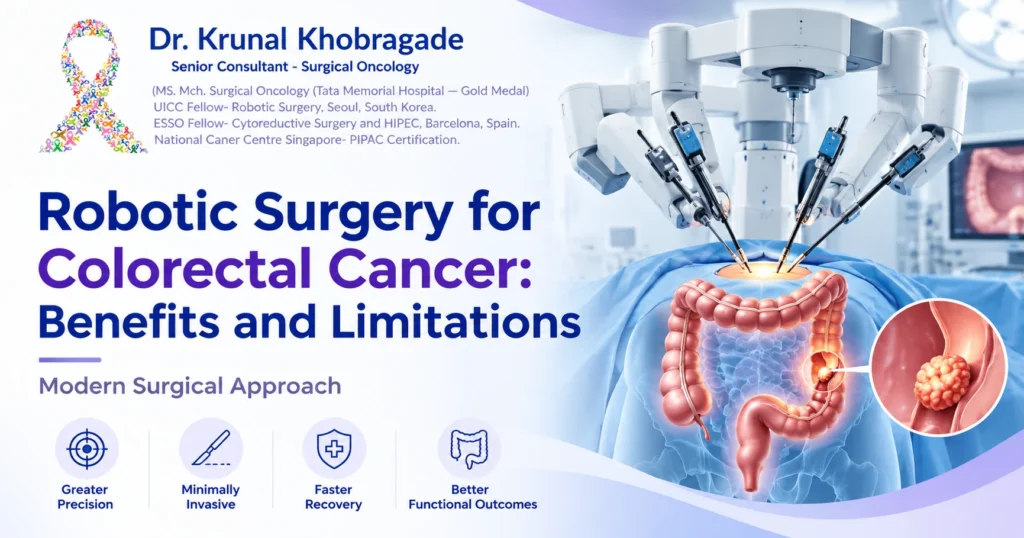
Robotic surgery is a type of minimally invasive surgery in which the surgeon controls robotic arms from a console in the operating room. The system uses small incisions, a magnified view of the surgical area, and precise instrument movement to help perform selected operations. The robot does not operate on its own; every movement is directed by the surgeon. :contentReference[oaicite:1]{index=1}
In cancer care, surgery is often used for solid tumors that are localized to one area. The National Cancer Institute notes that surgery works best for many solid tumors that are contained in one place and is generally not used in the same way for blood cancers or cancers that have already spread widely. :contentReference[oaicite:2]{index=2}
Simple way to understand it: robotic surgery is a surgical technique, not a diagnosis and not a promise of better results in every patient. The right operation is the one that is oncologically sound and safest for the specific case.
When to consider robotic surgery for cancer
A patient may consider robotic cancer surgery when the cancer is in a location where a minimally invasive approach is technically feasible, the disease stage supports surgery, and the treating surgeon believes robotic access can help achieve the goals of cancer surgery safely. In other words, the decision is based on cancer biology and surgical planning, not just on technology preference. :contentReference[oaicite:3]{index=3}
Robotic surgery may be worth discussing when:
- The tumor is localized and surgery is part of the treatment plan
- A minimally invasive approach may reduce tissue trauma in a suitable case
- The anatomy is complex and high-definition visualization may help
- The procedure is one that is commonly performed robotically in experienced centers
- The surgeon has experience with that specific robotic cancer procedure
Good reason to consider it
When robotic access may help the surgeon operate precisely through small incisions without compromising cancer principles.
Wrong reason to choose it
Choosing it only because it sounds modern, without asking whether it is truly appropriate for your cancer type and stage.
What are the possible benefits of robotic cancer surgery?
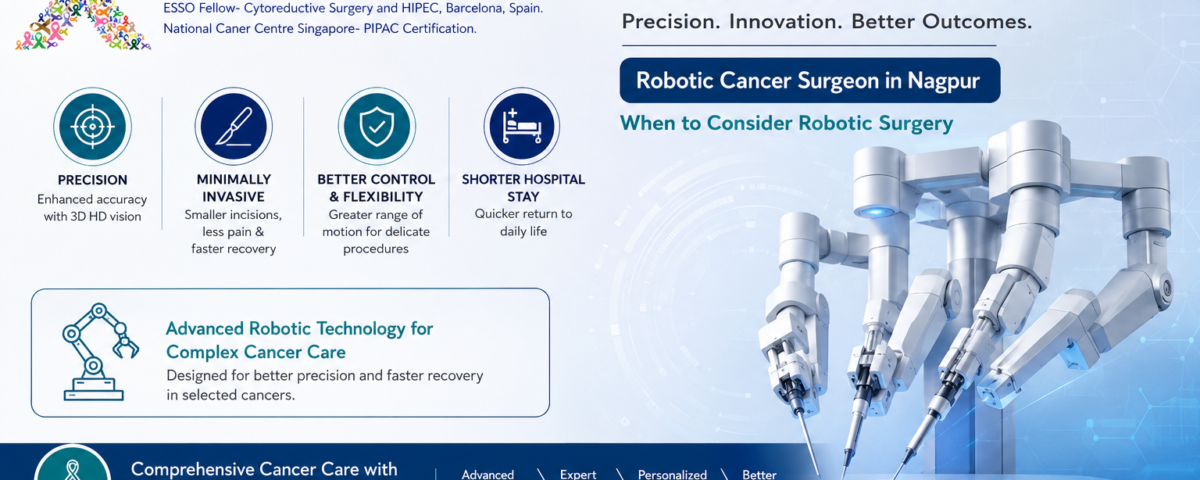
Cleveland Clinic notes that robotic surgery may offer potential advantages such as smaller incisions, less blood loss, less tissue trauma, less pain, shorter hospital stay, and quicker return to daily activities in selected procedures. The American Cancer Society also describes robotic surgery as a system that can help the surgeon operate through small cuts using precise instrument control. :contentReference[oaicite:4]{index=4}
Smaller incisions
Many robotic procedures are done through small cuts instead of one large incision, which may help with recovery in selected cases. :contentReference[oaicite:5]{index=5}
Better visualization
Robotic systems can give the surgeon a magnified 3D view and fine instrument control, which may be useful in confined surgical spaces. :contentReference[oaicite:6]{index=6}
Potentially faster recovery
Some patients may experience shorter hospital stay, less pain, and earlier return to routine activities depending on the operation and overall health. :contentReference[oaicite:7]{index=7}
These are possible benefits, not guarantees. Actual recovery depends on the cancer, the procedure, the patient’s general health, and whether additional treatments such as chemotherapy are also needed.
Why robotic surgery is not the right option for every patient
One of the most important things patients should know is that robotic surgery is not automatically better for every cancer. Suitability depends on whether a minimally invasive approach can achieve proper tumor clearance safely and whether it matches current evidence and guidelines for that disease. :contentReference[oaicite:8]{index=8}
A useful example comes from cervical cancer. NCI reported that for women with early-stage cervical cancer, open surgery became the standard approach after evidence showed worse outcomes with minimally invasive approaches in that setting. That is a strong reminder that the best cancer surgery is not the one with the smallest cut, but the one most appropriate for long-term cancer control. :contentReference[oaicite:9]{index=9}
Takeaway: the surgeon’s judgment, evidence for that disease, and oncologic safety matter more than choosing the newest-looking technology.
Which cancers may be treated with robotic surgery in selected cases?
Robotic surgery may be considered for some of the same cancers that are treated laparoscopically or thoracoscopically, depending on the center and the surgeon’s expertise. The American Cancer Society notes this broadly, while disease-specific pages describe robotic use in procedures such as prostate surgery, stomach surgery in some centers, and certain gynecologic procedures. :contentReference[oaicite:10]{index=10}
| Area | How robotic surgery may fit |
|---|---|
| GI cancers | Selected colorectal, stomach, and upper abdominal procedures may be considered robotically in appropriate patients and experienced hands. :contentReference[oaicite:11]{index=11} |
| Prostate cancer | Robot-assisted prostatectomy is a well-known example of robotic cancer surgery. :contentReference[oaicite:12]{index=12} |
| Gynecologic procedures | Some minimally invasive hysterectomy-based oncologic procedures may use robotic technology, though suitability depends on disease type and evidence. :contentReference[oaicite:13]{index=13} |
| Head and neck | Transoral robotic surgery may be used for selected tumors in hard-to-reach areas of the mouth and throat. :contentReference[oaicite:14]{index=14} |
For Dr. Krunal’s practice in Nagpur, this topic is especially relevant around GI, abdominal, and selected oncologic procedures where robotic surgery may be part of individualized treatment planning.
Questions patients should ask before choosing a robotic cancer surgeon in Nagpur
The quality of the decision often depends on the quality of the questions. Before proceeding, patients should ask:
- Is robotic surgery truly suitable for my cancer type and stage?
- Would open surgery or conventional laparoscopy be better in my case?
- What is the goal of surgery — cure, control, diagnosis, or symptom relief?
- How experienced is the surgeon with this exact robotic cancer procedure?
- What are the expected benefits, limits, and risks in my case?
- Will I still need chemotherapy, radiation, or other treatment afterward?
Good surgeon-patient discussion
Focuses on cancer stage, surgical goals, alternatives, safety, and recovery — not just marketing terms.
Good sign for trust
A surgeon who explains when robotic surgery is appropriate and when another approach may actually be better.
What is recovery like after robotic cancer surgery?
Recovery varies by procedure. In selected patients, robotic surgery may mean smaller wounds, less pain, and earlier mobility than a traditional open approach. Cleveland Clinic notes that shorter hospital stay and quicker return to daily life are potential benefits in some procedures. :contentReference[oaicite:15]{index=15}
However, cancer recovery is never just about skin incisions. The final recovery timeline also depends on the complexity of the operation, pathology findings, nutritional status, any complications, and whether further cancer treatment is planned.
Practical point: even when the approach is minimally invasive, cancer surgery is still major treatment. Patients should plan for follow-up visits, pathology review, activity restrictions, and ongoing oncology guidance.
When should you consult a robotic cancer surgeon in Nagpur?
You should consider consultation when you have been advised cancer surgery and want to understand whether a robotic or minimally invasive option is appropriate. This is especially useful if you have a GI, abdominal, pelvic, or other solid tumor for which surgery is being discussed as part of treatment.
You can also explore related pages such as Robotic GI Cancer Surgery in Nagpur, Cancer Surgeon in Nagpur, Whipple’s Surgery in Nagpur, and HIPEC and Cytoreductive Surgery.
Frequently Asked Questions
Not always. The best approach depends on the cancer type, stage, anatomy, evidence, and surgeon judgment. In some situations robotic surgery may help; in others open surgery may be the standard option. :contentReference[oaicite:16]{index=16}
No. The surgeon controls the robotic system and directs every movement. :contentReference[oaicite:17]{index=17}
Ask when surgery is being considered for a solid tumor and you want to know whether a minimally invasive approach is feasible and oncologically appropriate in your case. :contentReference[oaicite:18]{index=18}
Potential benefits may include smaller incisions, less blood loss, less pain, shorter hospital stay, and quicker recovery in selected procedures. :contentReference[oaicite:19]{index=19}
No. Some cancers and some stages are not suitable for robotic surgery, and evidence differs by disease type. :contentReference[oaicite:20]{index=20}
Need guidance from a robotic cancer surgeon in Nagpur?
If you or a family member has been advised cancer surgery and want to understand whether robotic surgery is appropriate, consult Dr. Krunal Khobragade for individualized evaluation and treatment planning.