
Pancreatic Cancer Surgery in Nagpur | Expert Surgical Evaluation by Dr. Krunal Khobragade
Pancreatic cancer treatment often needs a carefully planned surgical approach, especially when the disease is localized or potentially removable. At this stage, patients and families usually want clear answers: whether surgery is possible, whether a Whipple’s procedure is needed, what recovery may look like, and how treatment is planned safely.
Dr. Krunal Khobragade offers pancreatic cancer surgical evaluation in Nagpur with a focus on proper staging review, procedure suitability, multidisciplinary planning, and patient-centered guidance at every step.
Condition Focus
Pancreatic tumors requiring surgical oncology evaluation in Nagpur.
Common Procedure
Whipple’s surgery for tumors in the head of the pancreas when appropriate.
Planning Matters
Not every patient goes straight to surgery; treatment sequence depends on staging and operability.
Goal
Safe, well-planned treatment with clarity for patients and families.
Pancreatic Cancer Surgery: What Patients Need to Know
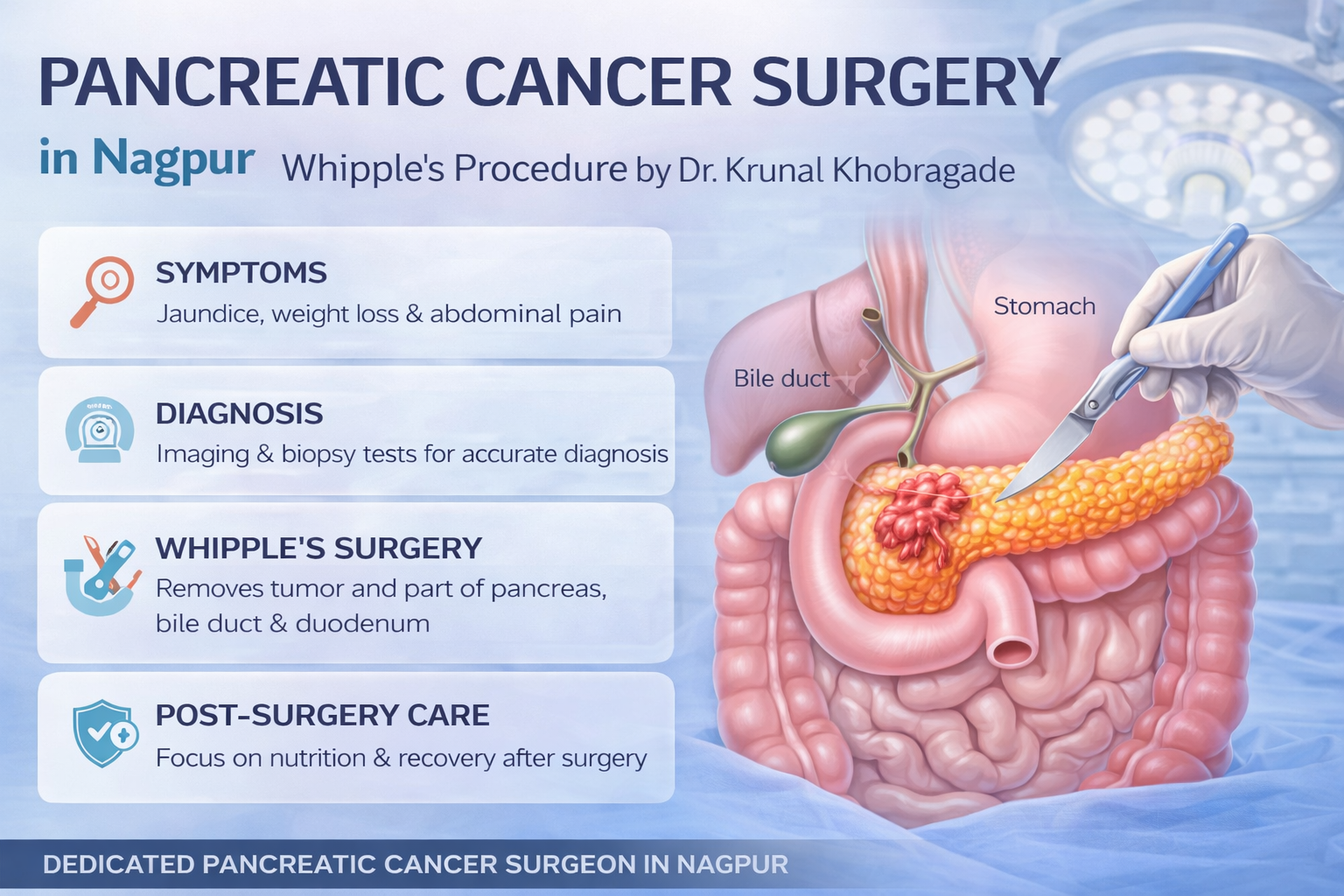
Pancreatic cancer surgery is usually considered when imaging and clinical assessment suggest that the tumor can be removed safely and that surgery can meaningfully contribute to treatment. Depending on the location of the tumor, the operation may involve a Whipple’s procedure, a distal pancreatectomy, or less commonly a total pancreatectomy.
For patients in Nagpur looking for pancreatic cancer surgery, the key questions are usually:
- Is the tumor operable?
- Will I need a Whipple’s surgery?
- Do I need chemotherapy before surgery?
- How risky is the operation?
- What will recovery and follow-up involve?
This page is designed to answer those questions in a clear, patient-focused way.
When Is Surgery Considered for Pancreatic Cancer?
Surgery is generally considered when the disease appears localized or potentially removable based on scans and specialist review. In some patients, the tumor is clearly resectable. In others, it may be called borderline resectable, which means the case needs especially careful planning and may involve treatment before surgery.
Resectable Disease
Surgery may be planned when imaging suggests the tumor can be removed completely with appropriate margins and the patient is fit for a major operation.
Borderline Resectable Disease
Some tumors are close to important blood vessels or need more treatment planning. These cases often require multidisciplinary discussion before the timing of surgery is decided.
The final decision depends on the patient’s overall health, tumor location, scan findings, and the wider treatment plan.
Types of Pancreatic Cancer Surgery
1) Whipple’s Procedure (Pancreaticoduodenectomy)
This is the most commonly discussed operation for cancers in the head of the pancreas. It is a complex surgery that removes the diseased portion of the pancreas along with nearby structures that may need to be removed as part of safe cancer surgery. It is then followed by reconstruction so digestion can continue.
2) Distal Pancreatectomy
This operation is considered for tumors in the body or tail of the pancreas. Depending on the situation, associated structures may also be addressed during surgery.
3) Total Pancreatectomy
In selected situations, removal of the entire pancreas may be required. This is not routine for every patient, but it may be considered when necessary for safe oncologic management.
| Surgery Type | Usually Considered For | Patient Point of View |
|---|---|---|
| Whipple’s Procedure | Tumors in the head of the pancreas | Most recognized pancreatic cancer surgery; requires detailed planning and recovery support |
| Distal Pancreatectomy | Tumors in the body or tail of the pancreas | Procedure choice depends mainly on where the tumor is located |
| Total Pancreatectomy | Selected cases where broader removal is required | Less common; considered only when clinically appropriate |
Whipple’s Surgery in Nagpur
Many patients searching for pancreatic cancer surgery in Nagpur are specifically looking for information on Whipple’s surgery. This procedure is commonly used when the tumor is located in the head of the pancreas and has not spread in a way that rules out surgical removal.
Because it is a major operation, patients need clear understanding of:
- why the surgery is recommended,
- what structures are involved,
- how long recovery may take,
- what diet and activity changes are expected initially, and
- how further cancer treatment may fit into the overall plan.
How Pancreatic Cancer Surgery Is Evaluated
Before surgery is planned, patients usually go through a structured evaluation process. This helps determine whether surgery is appropriate and what form of treatment sequencing is best.
Imaging Review
CT scans and other imaging help assess tumor location, surrounding structures, and possible spread.
Fitness for Major Surgery
General health, nutrition, jaundice status, and associated medical conditions are reviewed carefully.
Pathology / Diagnosis Confirmation
Where needed, tissue diagnosis and related reports are reviewed along with clinical findings.
Multidisciplinary Planning
Some patients may need chemotherapy before or after surgery as part of the overall treatment plan.
Symptoms That May Lead to Pancreatic Cancer Evaluation
Pancreatic cancer symptoms can be vague, which is one reason patients often reach a specialist after multiple initial consultations. Symptoms can vary, but some patients present with:
- persistent upper abdominal discomfort or back pain,
- unexplained weight loss,
- loss of appetite,
- jaundice,
- digestive changes, or
- new clinical findings on scans done for another reason.
These symptoms do not always mean pancreatic cancer, but they should not be ignored when they persist or worsen.
Recovery After Pancreatic Cancer Surgery
Recovery depends on the type of surgery performed, the patient’s preoperative condition, and whether additional treatment is needed later. Recovery is not just about discharge from the hospital; it also includes wound recovery, nutrition, activity progression, bowel function, follow-up visits, and planning the next phase of cancer care.
Patients commonly ask about:
- hospital stay after surgery,
- when oral intake improves,
- when they can resume routine activity,
- pain management,
- weight loss and diet concerns,
- follow-up scans and reports.
Why Patients in Nagpur Consider Dr. Krunal Khobragade for Pancreatic Cancer Surgery Evaluation

Dr. Krunal Khobragade
Dr. Krunal Khobragade focuses on GI and cancer surgery with attention to structured planning, disease-specific surgical evaluation, and patient guidance for complex cancer treatment decisions.
For pancreatic cancer cases, what matters most is thoughtful staging review, clarity around operability, and safe coordination of the broader treatment pathway.
GI & Onco-Surgical Focus
Relevant for pancreatic, biliary, stomach, colorectal, and complex abdominal cancer pathways.
Location Intent for Nagpur Patients
Clear local specialty visibility helps patients and families find the right surgical evaluation closer to home.
Need Pancreatic Cancer Surgery Guidance in Nagpur?
If you or a family member has been advised surgery for pancreatic cancer, or you want a specialist opinion on whether surgery is possible, you can consult Dr. Krunal Khobragade for detailed evaluation and treatment planning.
Frequently Asked Questions
The exact surgery depends on where the tumor is located. For tumors in the head of the pancreas, a Whipple’s procedure is commonly discussed. Tumors in the body or tail may require a distal pancreatectomy.
No. Surgery is considered only when the disease pattern, scan findings, and patient fitness make it appropriate. Some patients need other treatment first, and some may not be candidates for surgery depending on disease extent.
Whipple’s surgery, also called pancreaticoduodenectomy, is a major operation used mainly for tumors in the head of the pancreas. It involves removal of the affected pancreatic portion and reconstruction of the digestive tract.
Pancreatic cancer surgery is a major operation and requires proper evaluation, planning, and postoperative care. The risks vary depending on the procedure, the patient’s overall health, and the complexity of the case.
Operability is decided after reviewing scans, clinical condition, and disease extent. Terms like resectable or borderline resectable may be used after specialist review.
Yes. A second opinion can help patients understand whether surgery is appropriate, what type of operation may be needed, and whether the overall treatment sequence is suitable.
This page is for educational purposes and should not replace individualized medical consultation.