
Stomach Cancer Surgery in Nagpur | Surgical Evaluation & Treatment by Dr. Krunal Khobragade
Stomach cancer treatment often depends on the stage of the disease, the location of the tumor, and the patient’s overall condition. For many patients, surgery plays a central role in treatment planning, especially when the cancer is localized or part of a curative treatment approach.
If you are looking for stomach cancer surgery in Nagpur, it is important to understand when surgery is recommended, what type of gastric surgery may be needed, what recovery involves, and how the full treatment pathway is planned.
Main Focus
Stomach cancer surgical care and treatment planning in Nagpur.
Common Procedures
Partial gastrectomy or total gastrectomy depending on tumor location and spread.
Treatment Planning
Some patients may need chemotherapy before or after surgery based on stage and pathology.
Patient Goal
Clear guidance, safe treatment sequencing, and strong postoperative recovery support.
Understanding Stomach Cancer Surgery
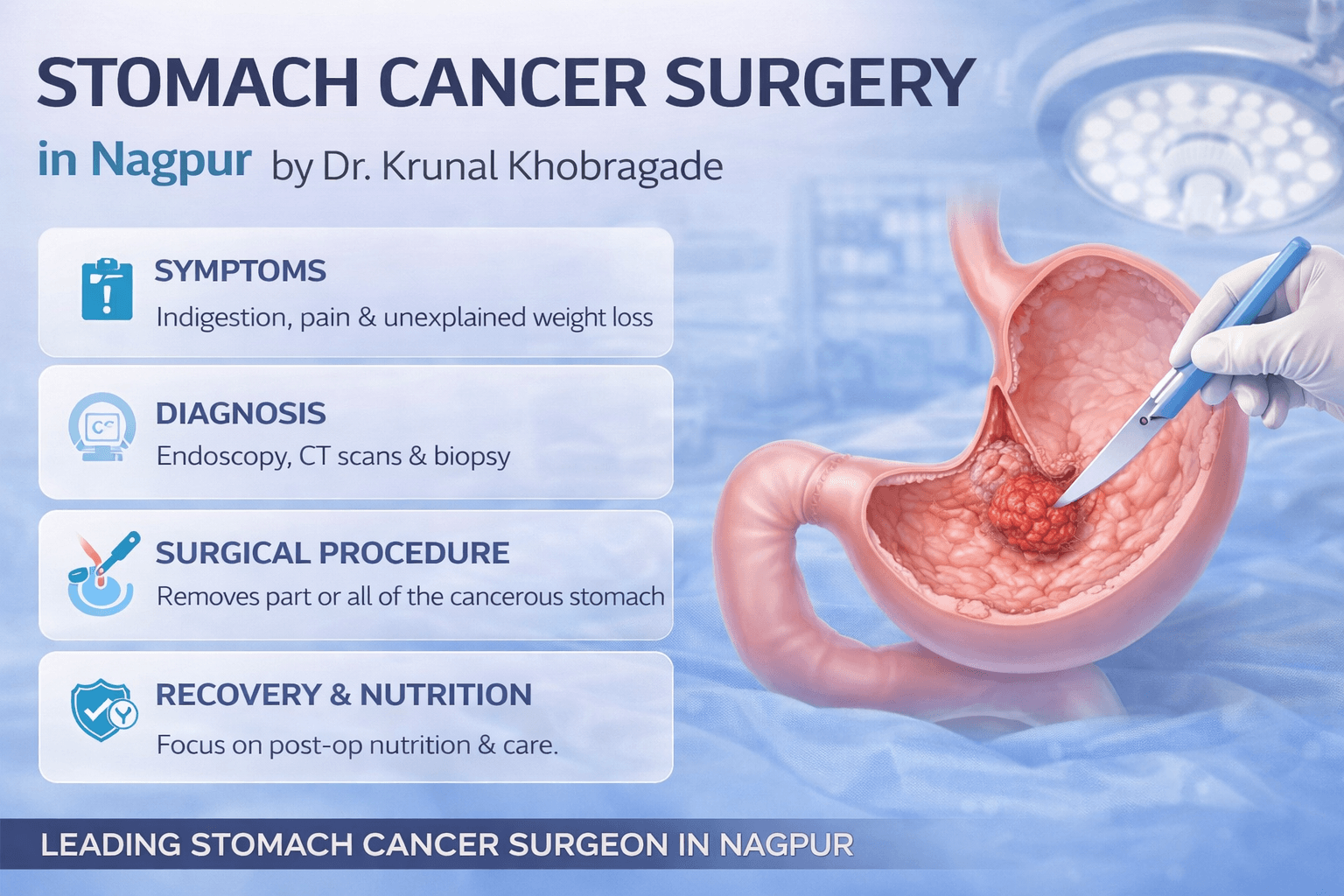
Surgery for stomach cancer is usually planned when the tumor is operable and the patient is fit for treatment. The exact operation depends on where the cancer is located in the stomach, how much of the stomach is involved, and what the scans and staging work-up show.
In many cases, patients hear terms such as gastrectomy, lymph node removal, and multidisciplinary treatment planning. These can sound overwhelming at first, but they are important parts of modern stomach cancer care.
For patients and families, the most common questions are:
- Do I need surgery for stomach cancer?
- Will part of the stomach or the whole stomach be removed?
- How is the disease staged before surgery?
- Will I need chemotherapy too?
- How will eating and digestion change after surgery?
When Is Surgery Recommended for Stomach Cancer?
Surgery is commonly considered when the cancer appears localized or when it is part of a planned curative treatment approach. The exact recommendation depends on stage, location, imaging findings, endoscopy results, and overall patient condition.
Localized or Operable Disease
When the cancer is confined in a way that makes removal possible, surgery may be a major part of treatment with curative intent.
Part of Combined Treatment
Some patients may need chemotherapy before surgery or after surgery depending on the stage, pathology, and multidisciplinary treatment plan.
In short, stomach cancer surgery is not decided only by the diagnosis itself. It is decided by the complete clinical picture.
Types of Stomach Cancer Surgery
1) Partial Gastrectomy
In some cases, only the affected portion of the stomach is removed. This is usually considered when the tumor location and extent allow a more limited resection while maintaining oncologic safety.
2) Total Gastrectomy
When more of the stomach is involved, or when tumor location makes it necessary, the entire stomach may need to be removed. Reconstruction is then done so the digestive tract can continue to function.
3) Lymph Node Dissection
Removal of nearby lymph nodes is often an important part of stomach cancer surgery because it helps with proper cancer surgery principles and disease assessment.
| Surgery Type | Usually Considered When | What Patients Commonly Ask |
|---|---|---|
| Partial Gastrectomy | The tumor is limited to a part of the stomach | How much stomach will remain and how eating may change |
| Total Gastrectomy | A larger or differently located tumor requires full stomach removal | How digestion changes and what long-term diet adjustments are needed |
| Lymph Node Removal | Part of standard oncologic surgical treatment | Why lymph nodes matter in staging and treatment planning |
How Stomach Cancer Is Evaluated Before Surgery
Before stomach cancer surgery is planned, patients usually undergo a thorough evaluation process. This helps clarify stage, tumor location, fitness for surgery, and the need for any additional treatment before the operation.
Endoscopy & Biopsy
These help confirm the diagnosis and provide important detail about the lesion.
Imaging Review
CT and related imaging help understand the extent of disease and treatment planning.
Nutritional Assessment
Weight loss, appetite, weakness, and nutritional status are very important before major GI surgery.
Multidisciplinary Discussion
Some patients need combined planning involving surgery and systemic therapy.
Symptoms That May Lead to Stomach Cancer Evaluation
Stomach cancer symptoms can sometimes be vague in the early phase, which is why some patients may initially ignore them or attribute them to acidity, indigestion, or gastritis.
- persistent upper abdominal discomfort,
- recurrent vomiting or bloating after meals,
- unexplained weight loss,
- loss of appetite,
- difficulty eating normal portions,
- bleeding-related symptoms or weakness,
- abnormal findings during endoscopy.
These symptoms do not always indicate cancer, but persistent or worsening symptoms should be properly evaluated.
Recovery After Stomach Cancer Surgery
Recovery after stomach cancer surgery depends on the type of procedure performed, the patient’s nutritional state before surgery, and whether the patient will need further treatment after the operation.
For many patients, recovery concerns are not only about the surgery itself but also about how daily life changes after treatment.
Common patient concerns include:
- how long the hospital stay may be,
- when oral intake starts and improves,
- what kind of diet changes are needed,
- whether weight loss is expected,
- how energy levels recover over time,
- when follow-up visits and treatment decisions happen.
Why Patients in Nagpur Consider Dr. Krunal Khobragade for Stomach Cancer Surgery Evaluation

Dr. Krunal Khobragade
Dr. Krunal Khobragade offers GI and cancer surgery evaluation with focus on disease-specific planning, operative suitability, and structured patient guidance for complex abdominal cancers.
In stomach cancer, surgical planning needs clarity, staging, and a careful approach that helps patients understand both treatment and recovery expectations.
GI Oncology Focus
Relevant for stomach, pancreatic, colorectal, gallbladder, and other abdominal cancer pathways.
Nagpur-Based Specialty Access
Clear local specialty presence helps patients find the right stomach cancer surgery evaluation closer to home.
Need Stomach Cancer Surgery Guidance in Nagpur?
If you or a family member has been diagnosed with stomach cancer and want clarity on surgery, staging, or treatment planning, consult Dr. Krunal Khobragade for detailed evaluation and guidance.
Frequently Asked Questions
Surgery is a major part of treatment for many patients, especially when the disease is operable. However, some patients may also need chemotherapy as part of the treatment plan before or after surgery.
Not always. Some patients need only part of the stomach removed, while others may need total gastrectomy. The exact surgery depends on tumor location, extent, and oncologic safety requirements.
Eating patterns usually change after stomach surgery. Recovery often involves smaller meals, gradual diet progression, and nutritional follow-up. The exact adjustment depends on the type of surgery performed.
Lymph node removal is often part of standard cancer surgery because it helps in proper oncologic treatment and disease assessment.
No. Some patients need staging work-up and treatment planning first, and some may be advised chemotherapy before surgery depending on the clinical situation.
Yes. A second opinion can help patients better understand operability, treatment sequence, surgery type, and expected recovery.
This page is for educational purposes and should not replace individualized medical consultation.