

Publication target:
Gallbladder Cancer Found After Gallstone Surgery: What Happens Next?
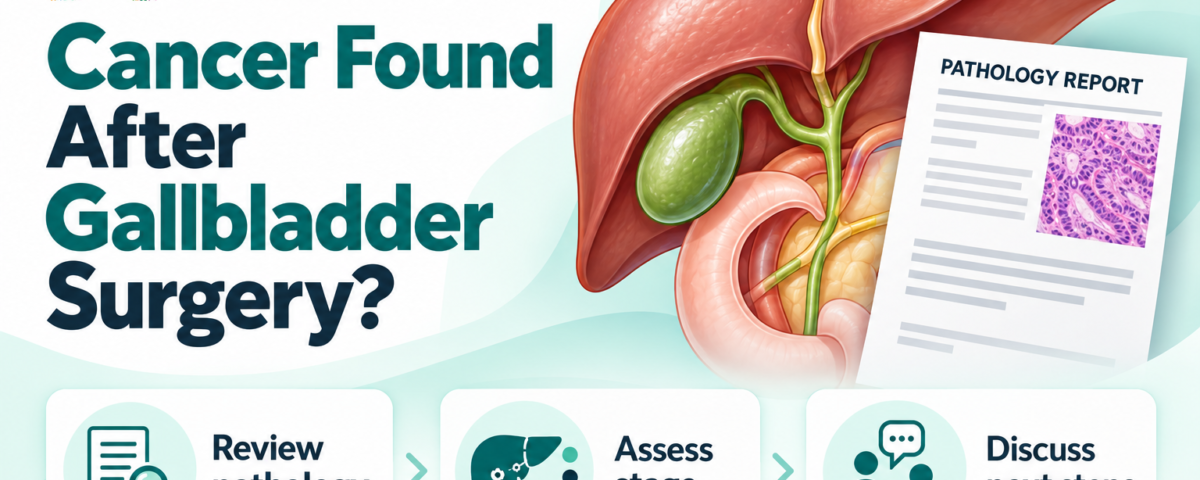
An unexpected cancer diagnosis in a gallbladder removed for stones can be frightening. The next step is to review exactly what the pathology shows and whether more treatment is needed. A second operation is a possibility in selected cases, rather than an automatic requirement for every patient.
Why can the diagnosis be unexpected?
A gallbladder removed for a presumed non-cancerous problem may be examined under a microscope and found to contain cancer. This is sometimes called incidental gallbladder cancer. The original reason for surgery does not, by itself, establish how extensive the cancer is.
Which details should be reviewed?
Ask for a discussion of the depth of invasion, the cut edges of the specimen and any other concerning pathology findings. The specialist also needs the first operation note and relevant imaging. Keep the original reports together; a discharge summary alone may not contain enough detail for a treatment decision.
When might further surgery be considered?
Treatment depends on the stage, whether cancer remains and whether a further operation can be performed safely. For selected localized cancers, surgery may involve nearby liver tissue and lymph nodes. Other patients may need a different approach. Ask the team to explain why their recommendation fits your particular findings.
How to prepare for the next discussion
Arrange a surgical oncology review and ask whether the tissue slides or blocks should be reassessed. Write down the date of the first operation, current symptoms and any recovery problems. Before consenting to another procedure, clarify its goal, alternatives and how recovery from the original surgery affects planning.
Frequently asked questions
Does everyone need a second operation?
No. The recommendation depends on the pathology, staging and individual fitness. Do not assume that the first operation was sufficient or insufficient without specialist review.
Should I repeat every scan before the appointment?
Ask the receiving team first. Bring existing reports and imaging files so they can decide what additional information is needed.
Discuss Your Reports With Dr. Krunal Khobragade
If you are seeking an individual opinion, bring your available reports and a list of questions to a consultation. Confirm the appointment location and arrangements with the clinic.
Related patient guides
Sources and further reading
Educational references checked 31 October 2026. Treatment decisions require an individual assessment.
Medical information: This article provides general education and does not diagnose a condition or replace advice from your treating team. Seek urgent medical care for severe or rapidly worsening symptoms.