

Publication target:
Dumping Syndrome After Stomach Surgery: Symptoms and Support
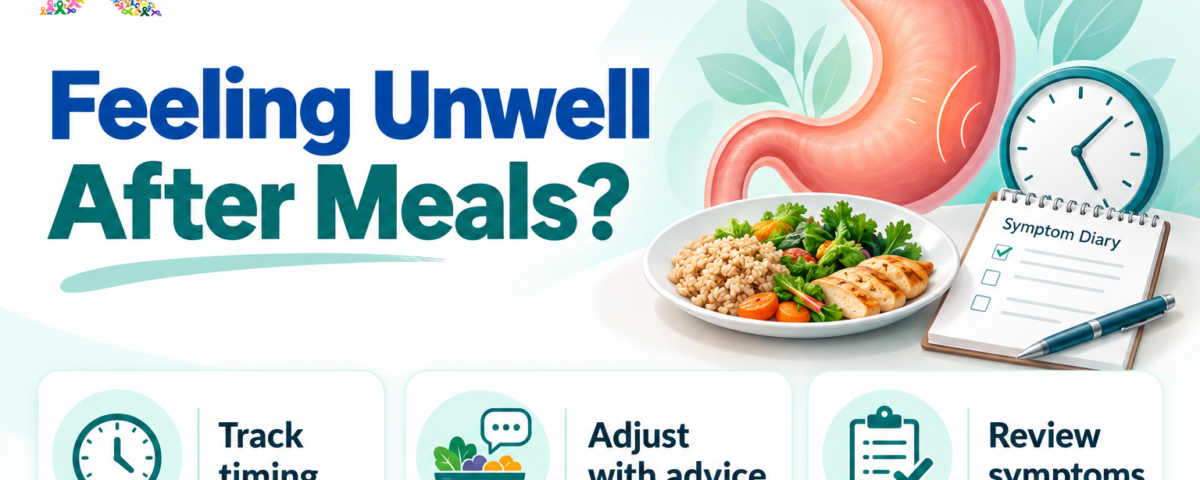
Feeling unwell after meals following stomach surgery can make eating stressful. Dumping syndrome is one possible explanation, but the symptoms need clinical assessment. The aim is to identify a manageable pattern while protecting nutrition and avoiding unnecessary food restrictions.
What dumping syndrome means
After some stomach operations, food can reach the small intestine more quickly than before. The resulting symptoms may occur soon after eating or later. Tell the team about the timing, the meal and what you felt, rather than describing all episodes simply as indigestion.
What to record before a review
Keep a diary of meals, drinks and symptoms such as cramping, diarrhoea, dizziness or sweating. Note how long after food they begin. Symptoms alone do not confirm the diagnosis, and the clinician may need to consider other causes of feeling unwell after surgery.
How treatment may be approached
Changes to eating habits are often the first step. A team may discuss smaller meals and a tailored approach to the foods and drinks that trigger symptoms. If symptoms persist, medicines or other assessment may be considered. Ask a dietitian to help maintain adequate intake rather than excluding large groups of foods on your own.
Ask for a practical plan
Agree on one or two changes to trial and a date to review them. Ask what to do during an episode and whether any symptoms require urgent care. Fainting, confusion, inability to maintain fluids or severe worsening symptoms should not be managed only with a routine food diary.
Frequently asked questions
Does every person who has stomach surgery develop dumping syndrome?
No. Symptoms and their severity vary, and other causes may need to be assessed.
Will changing my diet always be enough?
Dietary changes help many people, but persistent symptoms need a medical review. Additional treatment is considered individually.
Discuss Your Reports With Dr. Krunal Khobragade
If you are seeking an individual opinion, bring your available reports and a list of questions to a consultation. Confirm the appointment location and arrangements with the clinic.
Related patient guides
Sources and further reading
Educational references checked 31 October 2026. Treatment decisions require an individual assessment.
Medical information: This article provides general education and does not diagnose a condition or replace advice from your treating team. Seek urgent medical care for severe or rapidly worsening symptoms.