


Publication target:
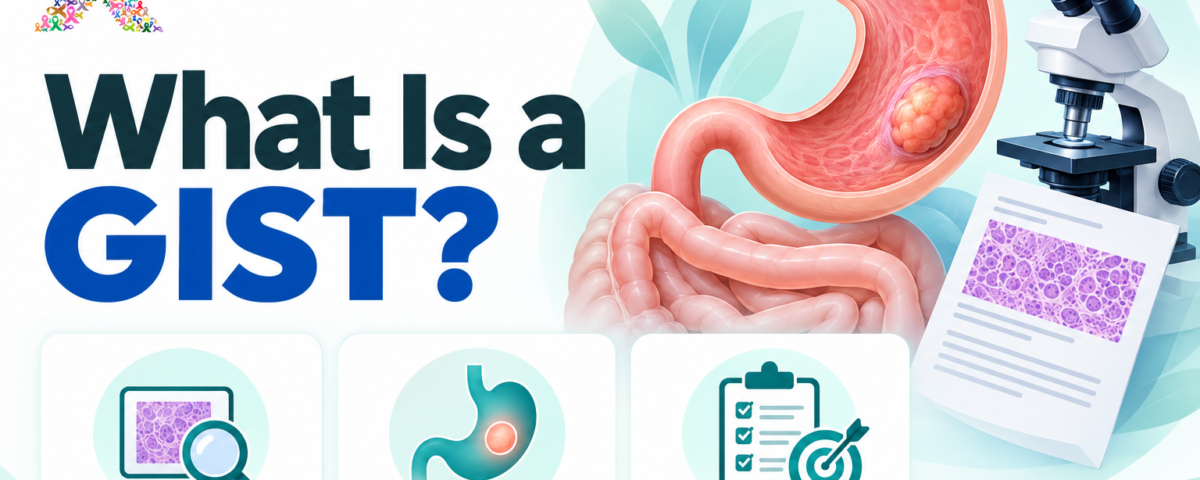
What Is a GIST? Understanding This Different Type of Digestive Tract Tumour
A gastrointestinal stromal tumour, or GIST, is not the same diagnosis as the more common cancers arising from the digestive tract lining. That distinction matters because treatment can differ. Ask for the exact tumour diagnosis before comparing your situation with another person’s stomach or bowel cancer.
Where GISTs can occur
GISTs arise in or near the gastrointestinal tract, most often in the stomach or small intestine. Their behaviour varies. Some grow slowly, while others can spread. A scan finding alone does not explain the full risk; ask which tissue findings and other tests are needed.
What guides treatment discussions
The team considers the tumour’s location, extent and characteristics. Depending on the case, the discussion can include surgery, targeted medicines or observation of selected small lesions. These choices are not interchangeable, and the appropriate sequence should be explained for your own findings.
Why targeted therapy may be discussed
Certain targeted medicines can be relevant to GIST treatment. Ask whether tumour testing affects the choice of medicine and whether treatment is being considered before or after surgery. Do not assume that the chemotherapy used for another digestive cancer is the standard approach for a GIST.
Prepare for a focused consultation
Bring the pathology report, relevant scans and details of any previous procedure. Ask what is confirmed, what still needs review and how the team will estimate the chance of recurrence. Request a written account of the proposed treatment sequence and the follow-up needed afterward.
Frequently asked questions
Is every GIST managed with immediate surgery?
No. Management depends on the individual tumour and clinical situation. A specialist assessment determines which approach is appropriate.
Is a GIST just another name for stomach cancer?
No. It is a distinct tumour type, even when it is located in the stomach.
Discuss Your Reports With Dr. Krunal Khobragade
If you are seeking an individual opinion, bring your available reports and a list of questions to a consultation. Confirm the appointment location and arrangements with the clinic.
Related patient guides
Sources and further reading
Educational references checked 31 October 2026. Treatment decisions require an individual assessment.
Medical information: This article provides general education and does not diagnose a condition or replace advice from your treating team. Seek urgent medical care for severe or rapidly worsening symptoms.
