

Publication target:
Bowel Urgency After Rectal Cancer Surgery: Understanding LARS
Frequent toilet visits after rectal cancer surgery can interfere with work, travel and confidence. Patients may feel they should simply tolerate the problem. These changes deserve assessment and a management discussion, especially when they are limiting daily life.
What LARS refers to
Low anterior resection syndrome describes a group of bowel function problems after certain rectal operations. Symptoms can include urgency, repeated bowel movements close together, leakage and difficulty emptying. The pattern and impact vary. Tell the team what happens on a typical difficult day, not just the number of visits.
Why assessment should come before self-treatment
Symptoms after cancer treatment can have more than one cause. A clinician may need to assess whether the problem fits LARS or whether another explanation needs attention. Do not assume that a new or worsening symptom is simply a permanent consequence of surgery.
What a management discussion can cover
Depending on the assessment, the team may discuss food adjustments, medicines, pelvic floor rehabilitation or other bowel-management approaches. These need to be matched to the symptom pattern. Avoid copying high-fibre diets or anti-diarrhoea routines without checking whether they suit your situation.
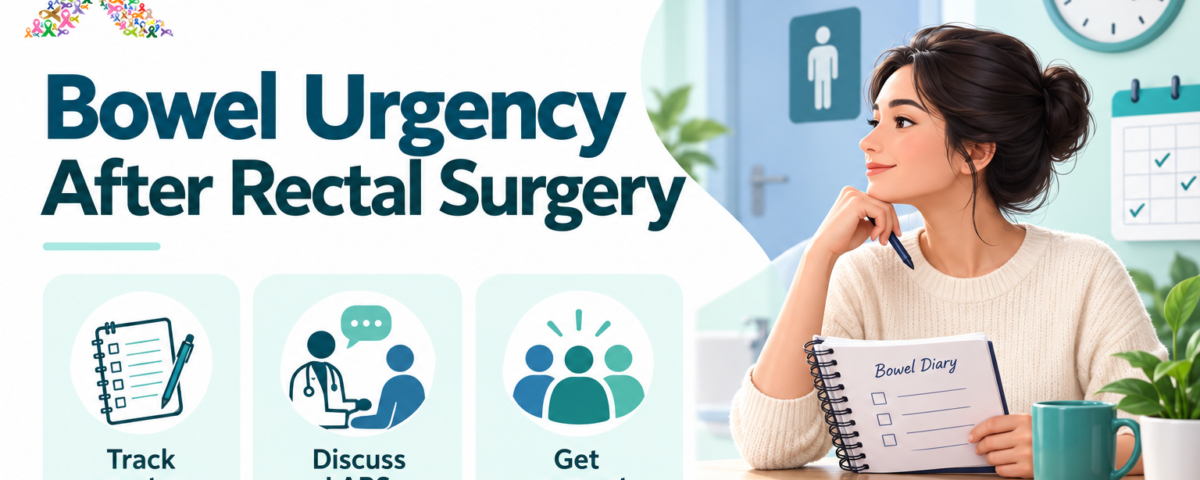
Use a bowel diary to explain the impact
Record timing, urgency, leakage, clustering and any link with meals or medicines. Add practical goals, such as completing a journey or returning to work. Ask how progress will be reviewed and what the next option would be if the first approach does not help.
Frequently asked questions
Does everyone develop LARS?
No. Bowel function differs after rectal cancer treatment, and symptom severity varies between patients.
Should I accept leakage as unavoidable?
Raise it with the team. Assessment can identify an appropriate plan and help clarify which options may be relevant.
Discuss Your Reports With Dr. Krunal Khobragade
If you are seeking an individual opinion, bring your available reports and a list of questions to a consultation. Confirm the appointment location and arrangements with the clinic.
Related patient guides
Sources and further reading
- MANUEL project: Management guidance for LARS
- British Society of Gastroenterology: GI symptoms after cancer treatment
Educational references checked 31 October 2026. Treatment decisions require an individual assessment.
Medical information: This article provides general education and does not diagnose a condition or replace advice from your treating team. Seek urgent medical care for severe or rapidly worsening symptoms.