

Publication target:
Family History of Colorectal Cancer: When to Ask About Genetic Counselling
One relative with bowel cancer does not prove that your family has an inherited cancer syndrome. It is still information worth discussing. The most useful starting point is an accurate family history, followed by advice tailored to the pattern of cancers and ages at diagnosis.
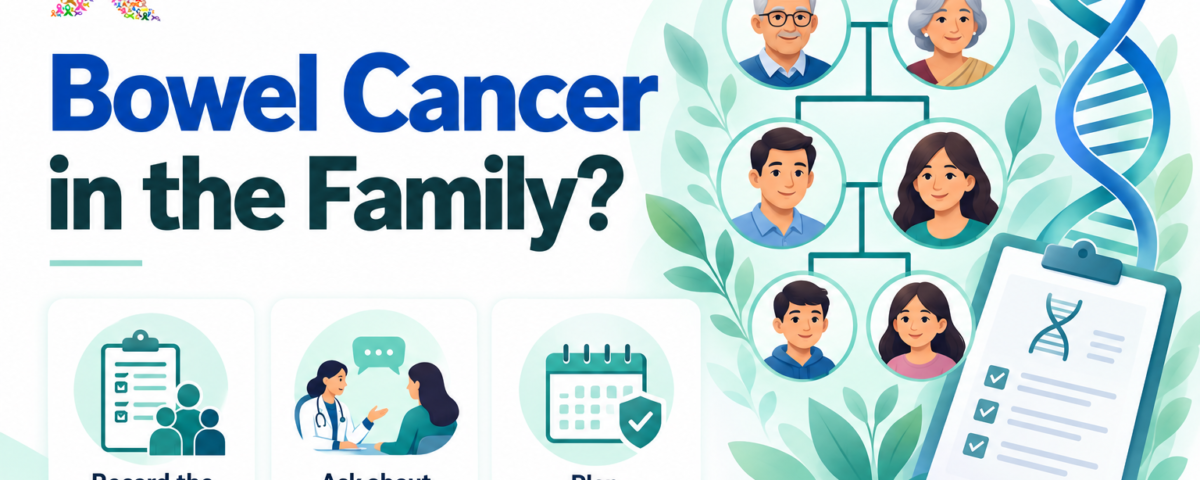
Record the details that change the discussion
List affected relatives, how they are related to you, the cancer type and the age at diagnosis. Include known genetic test results if available. Avoid guessing that an abdominal cancer was definitely bowel cancer; try to obtain the original information where possible.
What genetic counselling can clarify
Some colorectal cancers are associated with inherited conditions, including Lynch syndrome or familial adenomatous polyposis. Counselling helps assess whether testing is relevant and what different results could mean. A referral is a step toward understanding risk, not a declaration that an inherited condition has been confirmed.
Tumour testing and inherited testing are different
A test performed on cancer tissue can answer a different question from a blood or saliva test for inherited risk. Ask which test is being proposed and whether another step would be needed to clarify the result. Family members should not assume that someone else’s tumour result is their own genetic diagnosis.
Ask for a personal screening plan
The appropriate timing and type of screening depend on the individual risk assessment. Ask which relatives should receive advice and how to share verified information with them. If you currently have symptoms such as rectal bleeding, arrange assessment rather than waiting for a future screening date.
Frequently asked questions
Should everyone buy a broad genetic test?
No. The choice and interpretation of testing should follow an appropriate risk assessment and counselling discussion.
If genetic testing is negative, is my risk automatically average?
Not necessarily. Ask how the result fits with your personal and family history before changing a screening plan.
Discuss Your Reports With Dr. Krunal Khobragade
If you are seeking an individual opinion, bring your available reports and a list of questions to a consultation. Confirm the appointment location and arrangements with the clinic.
Related patient guides
Sources and further reading
Educational references checked 31 October 2026. Treatment decisions require an individual assessment.
Medical information: This article provides general education and does not diagnose a condition or replace advice from your treating team. Seek urgent medical care for severe or rapidly worsening symptoms.