
Blood in Stool: Piles, Fissures or Colorectal Cancer — When to Investigate?
Seeing blood in your stool can be frightening. The cause may be a common problem such as piles or an anal fissure—but some patterns require investigation for colorectal cancer or other bowel conditions. Learn what to notice, when to act and which tests may be recommended.
Does blood in stool mean colorectal cancer?
No. Blood in the stool does not automatically mean cancer. Piles (haemorrhoids), an anal fissure, bowel inflammation, infections and polyps are among the possible causes. However, colon or rectal cancer can also cause bleeding, and these conditions can look similar. You cannot reliably distinguish the cause by colour, quantity or pain alone. American Cancer Society guidance.
Piles and fissures are frequent causes, especially after hard stools or straining.
Even bright-red or painless bleeding may need evaluation if unexplained or recurrent.
Change in bowel habits, unexplained weight loss and anaemia increase concern.
The practical question is not “Is this definitely cancer?” but “What explains the bleeding, and do I need a rectal examination or bowel investigation?” In Nagpur, patients searching for blood in stool causes and colorectal cancer should begin with a qualified medical assessment, not a self-diagnosis.
What are the common causes of blood in stool?
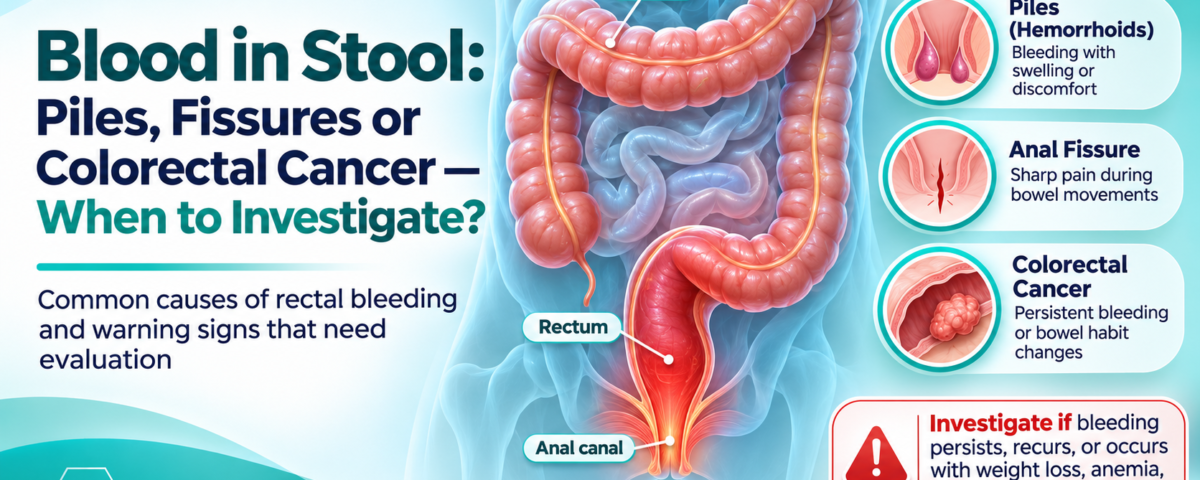
Piles (haemorrhoids)
Swollen blood vessels in or around the anus or lower rectum. Bleeding may appear as fresh red blood on toilet paper, on the stool surface or in the toilet. Itching or a lump may occur; internal piles may bleed without pain.
Anal fissure
A small tear in the lining of the anus. It often follows constipation or passing hard stools, causing sharp, tearing pain during a bowel movement and pain that may continue afterwards, with a small amount of fresh red blood.
Colorectal polyps or cancer
Polyps are growths in the colon or rectum; some may become cancerous over time. Colorectal cancer may cause visible or hidden bleeding, bowel-habit changes, iron-deficiency anaemia, abdominal discomfort or unexplained weight loss—and sometimes no symptoms early on.
Inflammation, infections or other bleeding
Inflammatory bowel disease, certain infections and diverticular disease can cause bowel bleeding. Medicines such as anticoagulants may increase bleeding, but they do not establish its source. Dark or tarry stool may indicate bleeding higher in the digestive tract.
Having piles does not rule out another bowel condition. A person can have haemorrhoids and a polyp or colorectal cancer at the same time. Recurring bleeding should not be repeatedly treated as piles without suitable assessment.
Piles vs fissure vs colorectal cancer: how do symptoms differ?
This comparison can help you describe the bleeding accurately to your doctor. It is not a diagnostic test: symptoms overlap, and some serious conditions initially have few warning signs.
| Feature | Piles | Anal fissure | Colorectal cancer |
|---|---|---|---|
| Typical bleeding | Often fresh red blood with or after stool | Usually small amounts of fresh red blood | May be bright red, darker, mixed with stool, or hidden |
| Pain | May itch, ache or cause a lump; internal piles can be painless | Sharp pain while passing stool; burning afterwards | May be painless; abdominal discomfort is possible |
| Bowel-habit changes | Often linked with straining or constipation | Commonly follows hard stools | Possible persistent diarrhoea, constipation or a change from usual pattern |
| Other concerns | Itching, swelling or discomfort | Anal spasm, pain on wiping | Anaemia, fatigue, unexplained weight loss or an abnormal test |
| What to do | Get the source confirmed; don’t assume all bleeding is piles | Have a clinician assess the painful tear and bleeding | Prompt clinical assessment; colonoscopy may be advised |
Based on symptom guidance from the NHS and American Cancer Society. No single row reliably confirms or excludes a diagnosis.
Does the colour of blood tell you where it is coming from?
The appearance of blood is useful information for a doctor, but colour alone does not prove the location or cause of bleeding. Some foods, iron supplements and medicines can change stool colour.
Blood only on tissue, dripping into the toilet, streaking the outside of stool, or mixed into stool are descriptions worth recording. Bleeding that stops and starts can still need evaluation. Do not rely on a photograph or internet comparison to identify cancer.
When should blood in stool be investigated?
Any unexplained rectal bleeding deserves medical advice. The urgency depends on the amount of blood, your general condition and accompanying symptoms—not just age.
Heavy bleeding or signs of serious blood loss
Seek emergency care for ongoing or substantial bleeding, large clots, fainting, marked dizziness, severe weakness, chest pain, breathlessness or severe abdominal pain. Black tar-like stool, particularly with illness or dizziness, also needs urgent assessment. Do not drive yourself if faint.
Concerning bleeding patterns or additional symptoms
Arrange prompt medical assessment for dark-red stool, bloody diarrhoea, repeated bleeding, new unexplained tiredness or anaemia, a persistent change in bowel habits, unexplained weight loss, or a family history of colorectal cancer with symptoms. Your clinician determines the need and timing of urgent investigations.
Even a small amount should be explained
If you notice a small streak of red blood after constipation, do not panic—but arrange a clinical review, particularly if it happens again, the cause is uncertain, you have a previous diagnosis of piles without an examination, or symptoms fail to resolve.
Warning signs that make an assessment especially important
Age matters, but it is not a guarantee: colorectal cancer becomes more common with age, yet younger adults can also develop it. Do not dismiss rectal bleeding only because you are under 40 or 45. Symptoms call for diagnostic assessment, which is different from routine screening of people without symptoms.
What tests may be advised for blood in stool?
A doctor begins with your history and an examination. The test chosen depends on how the bleeding looks, associated symptoms, age, personal and family history, medicines and any signs of anaemia or bowel disease.
History and clinical examination
Your clinician may ask about frequency of bleeding, pain, constipation, diarrhoea, weight changes, medicines and family history. An abdominal and, where appropriate, anal or digital rectal examination may help identify a fissure, piles or a suspicious finding.
Blood tests and selected stool tests
A complete blood count can identify anaemia. Other blood or stool tests may be recommended depending on the situation. A faecal immunochemical test (FIT) is not a substitute for appropriate diagnostic evaluation when visible bleeding or concerning symptoms are present.
Direct visual examination
Anoscopy or proctoscopy may help evaluate the anus or lower rectum; flexible sigmoidoscopy assesses part of the large bowel. A colonoscopy examines the colon and rectum and may allow removal of polyps or sampling of abnormal tissue.
Biopsy and further imaging, only if indicated
If an abnormal growth is found, a biopsy can establish what it is. If cancer is diagnosed, the specialist team may recommend additional imaging and staging investigations before discussing treatment; surgery is not automatically the next step for everyone.
Not every episode of rectal bleeding requires an immediate colonoscopy. But colonoscopy is often important when bleeding is unexplained, recurrent, accompanied by red flags, associated with anaemia or when the clinical examination does not adequately explain symptoms. The decision should be made with a qualified clinician. Learn about colorectal diagnostic tests.
If a colorectal cancer diagnosis is confirmed, a patient’s care may involve gastroenterology, pathology, radiology, medical oncology and a surgical oncologist. Dr. Krunal Khobragade’s colorectal cancer surgery information for Nagpur explains treatment planning after diagnosis.
What should you tell the doctor about rectal bleeding?
These details make the assessment more informative. You can write them down before your appointment rather than trying to remember everything at the clinic.
Three questions to ask in your consultation
“What is the likely source of bleeding?” “Do my symptoms warrant a colonoscopy or another test?” “What changes mean I should seek urgent care?”
If you take blood-thinning medication, tell your doctor. Do not stop prescribed medication yourself because you have noticed blood in stool.
Blood in stool and colorectal cancer evaluation in Nagpur
If rectal bleeding or a test result raises concern about colorectal cancer, timely assessment can clarify the cause and whether a referral to a bowel specialist or cancer team is appropriate. Patients with confirmed or suspected colorectal tumours may discuss reports and treatment options with a surgical oncology specialist.
Dr. Krunal Khobragade
Senior Consultant Surgical Oncologist in Nagpur with a clinical focus that includes gastrointestinal, colon and rectal cancers. His website lists consultation availability at Cancer Care in Ramdaspeth and additional hospital locations in Nagpur. Appointment location and availability should be confirmed with the clinic.
Explore GI and colorectal cancer care or read when colon cancer symptoms warrant specialist advice.
Contact the clinicImportant distinction: Dr. Krunal’s oncology consultation is not a replacement for emergency treatment of severe bleeding. For new bleeding without a diagnosis, an initial assessment by an appropriate clinician may be needed to establish the cause and determine the right referral.
Frequently asked questions about blood in stool
Is bright red blood in stool always piles?
No. Bright red bleeding can occur with piles, fissures and other conditions, including rectal cancer. Its appearance cannot confirm the source. Unexplained or repeated bleeding should be assessed.
Can a fissure cause blood every time I pass stool?
Yes. A fissure can cause repeated small amounts of bright red bleeding, often with sharp pain during or after bowel movements. Ongoing symptoms still need assessment; not all bleeding is caused by a fissure.
Can colorectal cancer cause painless bleeding?
Yes. Colorectal cancer may cause bleeding without pain, and early cancer may have no symptoms. Painless blood in stool should not automatically be dismissed as internal piles.
Should I worry if blood in stool stops on its own?
Bleeding can be intermittent even when the underlying cause remains. Tell a clinician if you have noticed unexplained bleeding, especially if it returns or occurs with bowel changes, fatigue, anaemia or weight loss.
Do I need a colonoscopy for a small amount of blood?
Not necessarily in every case. A doctor will decide based on symptoms, examination, medical and family history, risk factors, and sometimes test results. Recurrent or unexplained bleeding and warning signs can make colonoscopy more important.
Can younger adults have colorectal cancer?
Yes. Although risk generally increases with age, colorectal cancer can occur in younger adults. Age alone should not be used to rule out evaluation for persistent or concerning bleeding.
Can I rely on a negative stool blood test to rule out cancer?
No single test reliably excludes every cause of symptomatic bleeding. A negative FIT or other stool test must be interpreted in your clinical context; your doctor may still recommend endoscopic examination when warranted.
What if I already have piles but continue seeing blood?
Arrange reassessment rather than repeatedly assuming that piles explain the bleeding. Other conditions can coexist, and further examination or colonoscopy may be advised according to your clinical findings.
Where can I seek colorectal cancer advice in Nagpur?
For acute heavy bleeding, use an emergency service. For persistent rectal bleeding, start with a qualified clinician or gastroenterologist for diagnostic evaluation. If colorectal cancer is suspected or confirmed, Dr. Krunal Khobragade offers surgical oncology consultation in Nagpur; check the clinic’s contact and appointment page.
Related reading and reliable medical sources
These pages cover diagnosis, treatment planning and related bowel concerns without turning this symptom article into a separate surgery-sales page.
References reviewed for this article
Concerned about persistent bleeding or a colorectal test result?
Do not assume every episode of blood in stool is piles. Discuss unexplained or repeated bleeding with a qualified clinician. For suspected or confirmed colorectal cancer, request an individualized surgical oncology consultation with Dr. Krunal Khobragade.
Cancer Care Clinic — Ramdaspeth, Nagpur
Cancer Care, Aditya Enclave, Central Bazar Road, opposite Somalwar High School, Ramdaspeth, Nagpur, Maharashtra 440010, India.
Additional listed consultations
HCG Nagpur Cancer Hospital (Binaki) and KIMS–Kingsway Hospitals (Mohan Nagar), Nagpur. Please confirm the active consulting location and timing with the clinic before travelling.