
Publication target:
Surgical Wound Problems After Cancer Treatment: When to Contact the Team
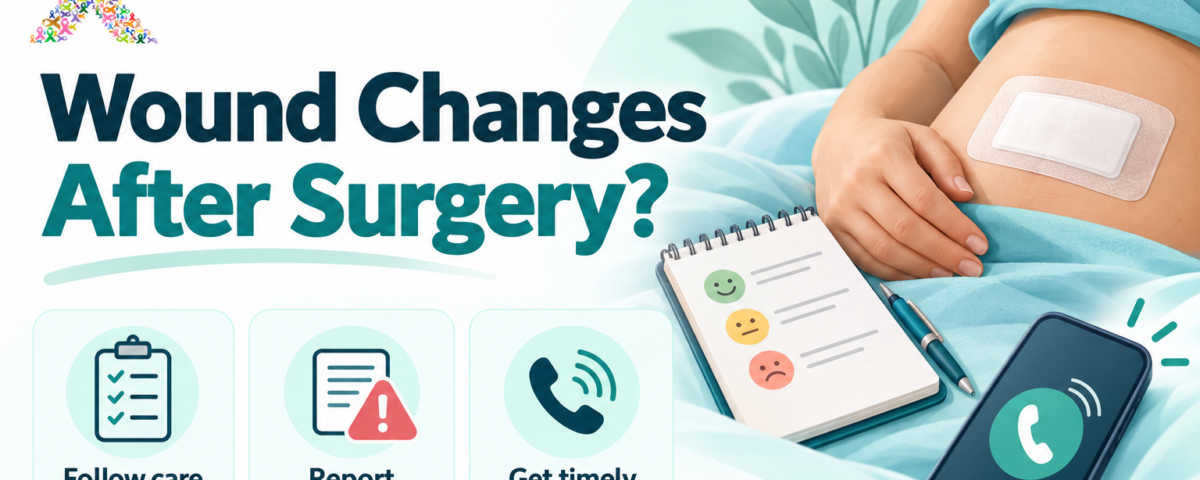
A wound that looks different from yesterday can create uncertainty after discharge. You need clear instructions about what is expected and whom to call. New or worsening changes deserve attention rather than waiting until the next scheduled dressing or clinic appointment.
Changes that should be reported
Increasing redness, warmth, swelling, pain or discharge can be signs of a wound problem. Fever or feeling generally unwell also matters. Tell the surgical team when the changes began and whether they are spreading or getting worse. A photograph may be useful if the team asks for one, but it does not replace an examination when needed.
When to seek urgent assessment
Rapidly worsening pain or swelling, heavy bleeding, a wound opening significantly, fever with marked illness or any breathing difficulty needs urgent medical attention. If you are acutely unwell, use an emergency service rather than waiting for a message reply from the clinic.
Follow the instructions for your wound
Dressings, stitches, staples and drains need different care. Ask what should be kept dry, when dressings are changed and who will remove any staples or sutures. Do not add creams, powders or home remedies unless approved. Do not start leftover antibiotics without a clinician’s advice.
Before leaving hospital
Request a written wound-care plan and a contact for evenings or weekends. Ask what to do if the dressing becomes wet, soiled or loose. If someone will help at home, include them in the teaching and make sure they know when to seek help.
Frequently asked questions
Can every wound problem be diagnosed from a photograph?
No. The clinician may need an examination or additional assessment, especially if you have fever or worsening symptoms.
Should I use antibiotics left from an earlier illness?
No. Contact the treating team so the cause can be assessed and the appropriate management chosen.
Discuss Your Reports With Dr. Krunal Khobragade
If you are seeking an individual opinion, bring your available reports and a list of questions to a consultation. Confirm the appointment location and arrangements with the clinic.
Related patient guides
Sources and further reading
Educational references checked 31 October 2026. Treatment decisions require an individual assessment.
Medical information: This article provides general education and does not diagnose a condition or replace advice from your treating team. Seek urgent medical care for severe or rapidly worsening symptoms.