
Early Signs of Stomach Cancer: When Should You See a Specialist?
Early stomach cancer may cause mild or non-specific digestive symptoms, and many of these symptoms can also occur with common non-cancer conditions. The important issue is persistence, progression and unexplained warning signs.
What are the possible early signs of stomach cancer?
Early stomach cancer does not always cause clear symptoms. When symptoms do occur, they may initially resemble common digestive problems.
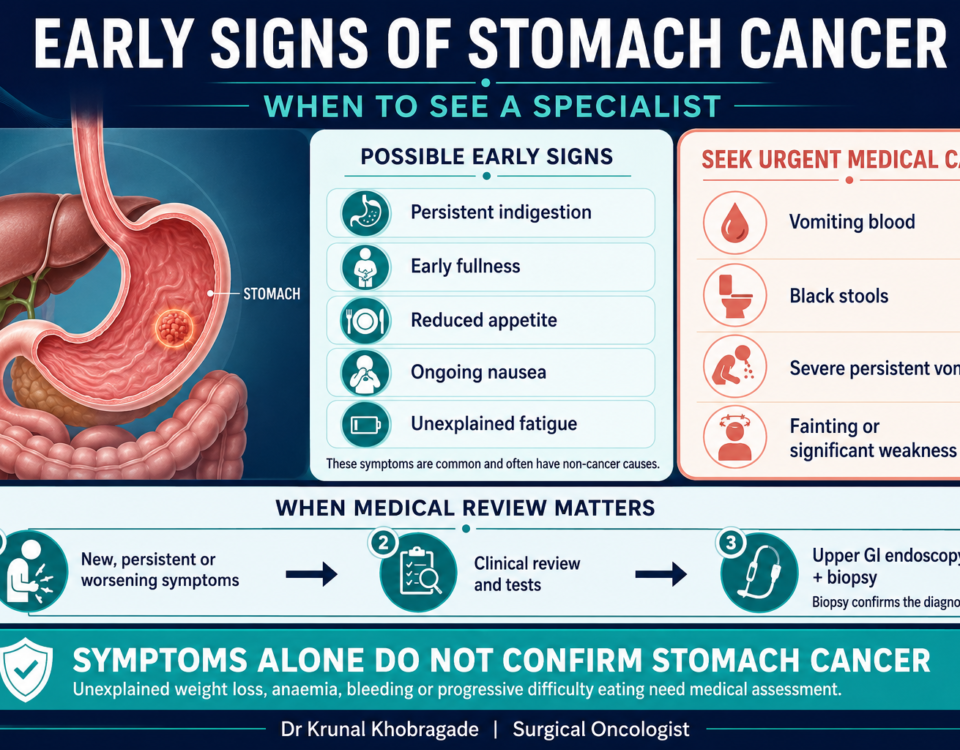
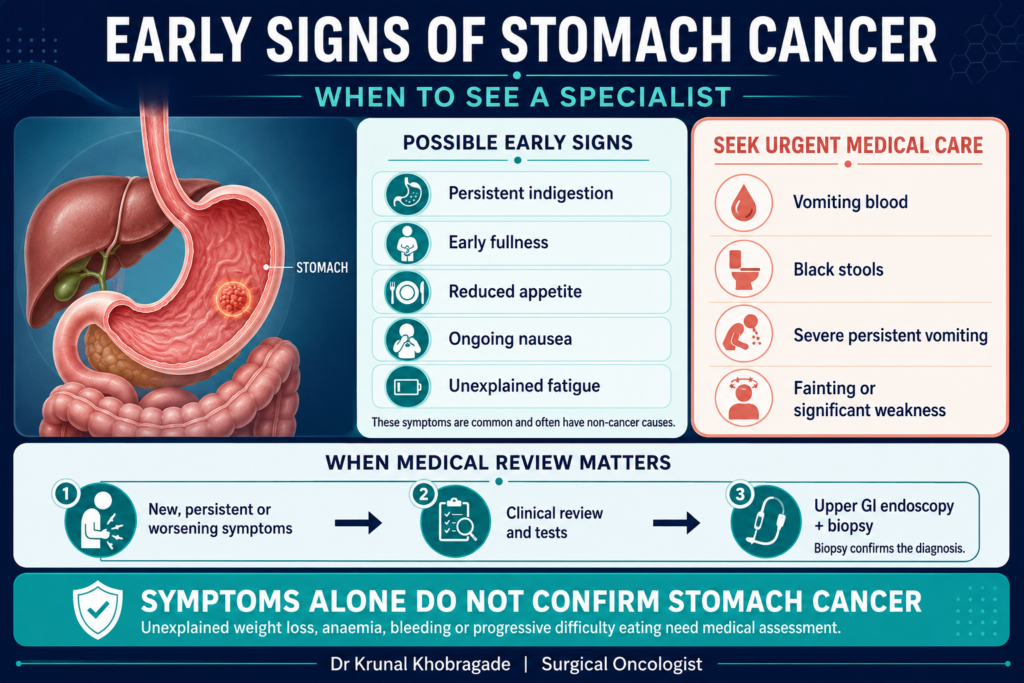
Persistent indigestion
Ongoing upper abdominal discomfort, burning or indigestion that does not settle as expected.
Early fullness
Feeling unusually full after eating only a small amount of food.
Reduced appetite
Persistent loss of appetite or avoidance of food without an obvious reason.
Upper abdominal discomfort
Repeated pain, pressure or heaviness in the upper abdomen.
Nausea
Ongoing nausea, especially when associated with reduced food intake or weight loss.
Unexplained fatigue
Persistent tiredness can sometimes occur with anaemia or reduced nutrition.
Which warning signs should not be ignored?
- Unexplained weight loss
- Persistent vomiting
- Vomiting blood
- Black or tar-like stools
- Progressive difficulty eating
- Increasing abdominal pain
- Persistent loss of appetite
- Unexplained anaemia or weakness
- Symptoms that continue despite appropriate treatment
Why can stomach cancer symptoms be mistaken for acidity or gastritis?
Indigestion, bloating, upper abdominal discomfort and early fullness are extremely common symptoms and are often caused by non-cancer conditions.
The concern increases when symptoms are new, persistent, progressively worsening, associated with weight loss or bleeding, or occur in someone with other concerning clinical factors.
| More common digestive complaint | Reason to seek further evaluation |
|---|---|
| Occasional acidity after certain foods | Persistent symptoms despite treatment or a new pattern of symptoms |
| Short-term indigestion | Ongoing indigestion with weight loss, poor appetite or anaemia |
| Temporary nausea | Repeated vomiting or difficulty keeping food down |
| Mild bloating | Progressive early fullness or reduced food intake |
Who may need earlier investigation?
The decision to investigate symptoms depends on the overall clinical picture rather than one symptom alone. Doctors may recommend earlier testing when symptoms are persistent or accompanied by warning features.
- Unintentional weight loss
- Evidence of gastrointestinal bleeding
- Iron-deficiency anaemia without a clear explanation
- Persistent vomiting
- Progressive swallowing or eating difficulty
- Strong family or personal clinical risk factors
- Symptoms that do not improve with appropriate initial treatment
How are persistent stomach symptoms evaluated?
Evaluation usually begins with a clinical history and examination. Depending on the symptoms, the doctor may recommend blood tests, imaging or upper GI endoscopy.
Upper GI endoscopy
Endoscopy allows the doctor to examine the oesophagus and stomach directly. If an abnormal area is seen, a biopsy can be taken.
Biopsy
A biopsy is required to confirm whether suspicious tissue is cancerous. Symptoms or scans alone cannot confirm stomach cancer.
CT scan
If cancer is diagnosed, CT imaging is commonly used to assess the extent of disease and help plan treatment.
When should you see a surgical oncologist?
A surgical oncologist is generally involved after stomach cancer is confirmed or strongly suspected and surgery may form part of the treatment plan.
You may consider specialist consultation when:
- A biopsy confirms stomach or gastric cancer
- Endoscopy shows a suspicious stomach tumour
- CT or other imaging suggests potentially operable disease
- You have been advised to undergo gastrectomy
- You want a second opinion before major stomach surgery
- You need to understand whether surgery comes before or after chemotherapy
- You want to know whether laparoscopic or robotic surgery may be appropriate
What happens if stomach cancer is confirmed?
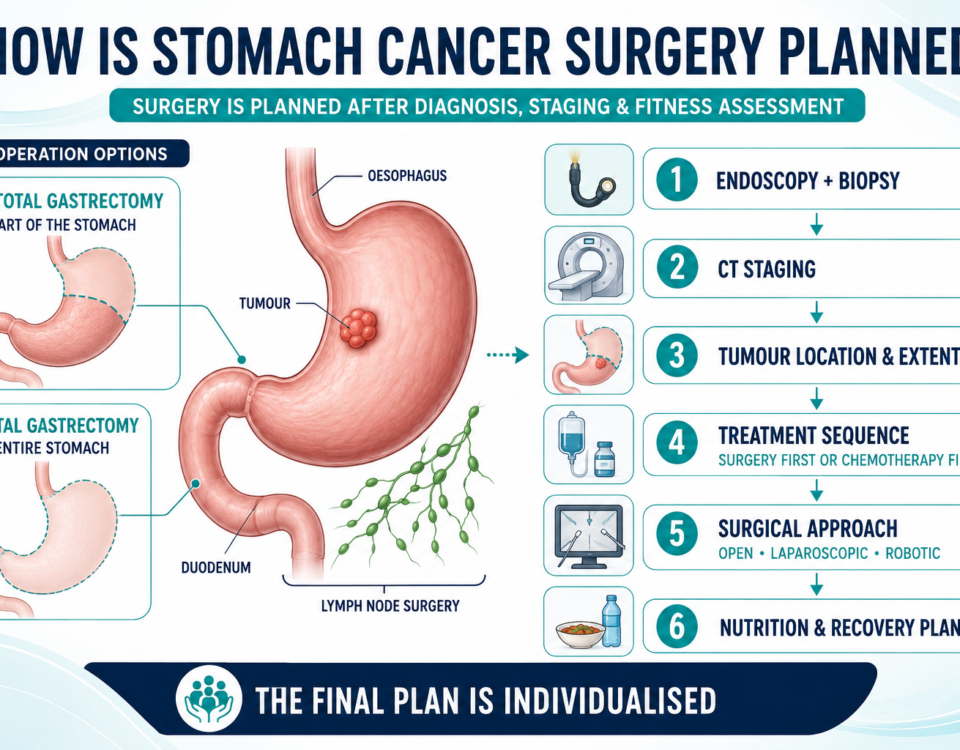
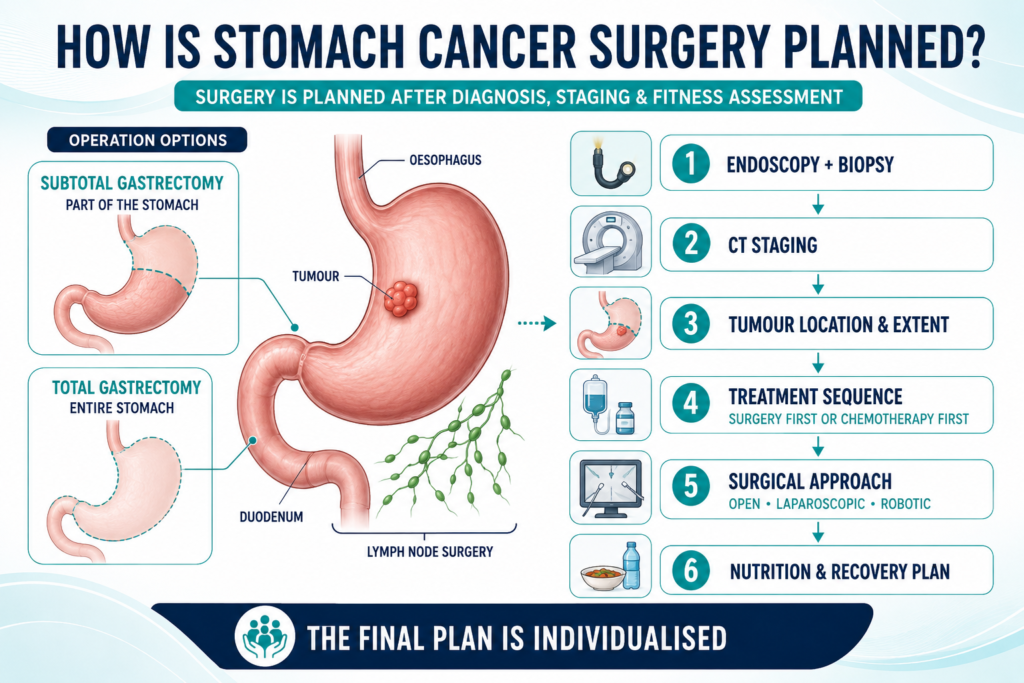
The next step is staging. The treatment team needs to determine the tumour’s location, depth, lymph-node involvement and whether it has spread elsewhere.
Some patients may undergo surgery first, while others may receive chemotherapy before surgery. The operation may involve subtotal gastrectomy or total gastrectomy together with regional lymph-node removal.
Can early diagnosis make treatment easier?
In general, cancers detected at an earlier stage may have more treatment options than cancers discovered after extensive spread. However, symptoms alone cannot tell the stage.
The practical takeaway is simple: persistent warning symptoms deserve timely medical evaluation rather than months of repeated self-medication.
Questions to ask after a stomach cancer diagnosis
- What stage is the cancer?
- Where exactly in the stomach is the tumour?
- Has it spread to lymph nodes or other organs?
- Do I need chemotherapy before surgery?
- Will I need part of the stomach or the whole stomach removed?
- Would laparoscopic or robotic surgery be suitable?
- What nutritional changes should I expect?
Stomach cancer evaluation and surgery consultation in Nagpur
Dr. Krunal Khobragade is a Surgical Oncologist with a focus on GI, colorectal and robotic cancer surgery. Patients can consult after a confirmed stomach cancer diagnosis, suspicious endoscopy, planned gastrectomy or for a second opinion on treatment sequencing.
Ramdaspeth OPD: Cancer Care, Aditya Enclave, Central Bazar Road, opposite Somalwar High School, Nagpur.
Related stomach cancer information
Frequently asked questions
What is usually the first sign of stomach cancer?
Does acidity mean I have stomach cancer?
Can stomach cancer cause weight loss?
Which test confirms stomach cancer?
When should I see a cancer surgeon?
Can stomach cancer be treated with robotic surgery?
Medical references
- National Cancer Institute. Gastric Cancer Treatment (PDQ®).
- American Cancer Society. Signs and Symptoms of Stomach Cancer.
- American Cancer Society. Tests for Stomach Cancer.
This article is for patient education and does not replace individual medical evaluation. Persistent or concerning symptoms should be discussed with a qualified clinician.