


Publication target:
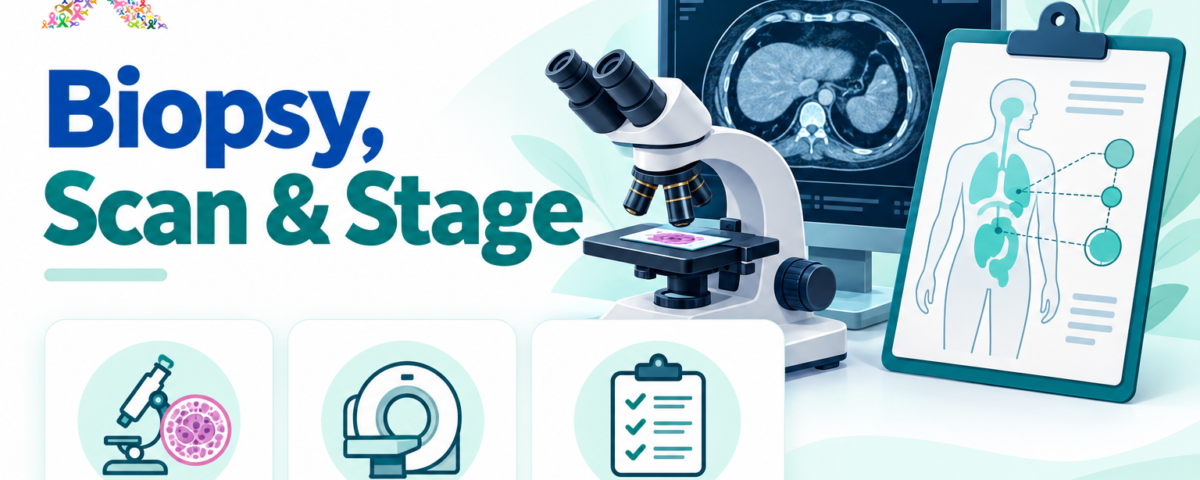
Biopsy, Scan and Cancer Stage: What Each Report Can Tell You
A biopsy report and a scan report may appear to tell different stories because they answer different questions. One helps identify the tissue diagnosis; another helps show where an abnormality is located. Understanding their roles makes the next consultation easier to follow.
What a biopsy contributes
A biopsy takes a tissue or cell sample for examination. It can help establish the diagnosis and characteristics of a tumour. It does not automatically show the extent of disease throughout the body. Ask which conclusions are confirmed and whether any additional pathology results are pending.
What imaging contributes
Imaging provides information about the location and extent of abnormalities. The type of scan is chosen for the clinical question. Not every patient needs every imaging test, and an abnormal scan does not always establish the exact tissue diagnosis. Ask why the recommended scan is needed.
How staging brings information together
Stage describes the extent of cancer. It is different from grade, which relates to the appearance of cancer cells. Clinical assessment, imaging and tissue findings can contribute to staging. The team may refine the information after surgery or other treatment; ask which stage description is being discussed.
Organize reports by the question they answer
Bring original pathology reports, scan reports and image files in date order. Keep a separate list of results still awaited. At the appointment, ask the clinician to explain the diagnosis, current understanding of extent and the decision each remaining test will support. This is more useful than requesting tests without a clear purpose.
Frequently asked questions
Does a biopsy diagnose every cancer in the same way?
No. The safest and most useful diagnostic approach depends on the suspected condition and its location.
Is a PET scan necessary for everyone?
No. Imaging should answer a specific clinical question. Your team decides which tests are relevant to the suspected cancer.
Discuss Your Reports With Dr. Krunal Khobragade
If you are seeking an individual opinion, bring your available reports and a list of questions to a consultation. Confirm the appointment location and arrangements with the clinic.
Related patient guides
Sources and further reading
Educational references checked 31 October 2026. Treatment decisions require an individual assessment.
Medical information: This article provides general education and does not diagnose a condition or replace advice from your treating team. Seek urgent medical care for severe or rapidly worsening symptoms.