


Publication target:
Lymph Nodes and Cancer Surgery: What Patients Should Understand
A report mentioning lymph nodes does not tell the whole cancer story. The useful questions are which nodes are involved, how the finding was established and how it changes treatment. Avoid assuming that every enlarged node means cancer or that every positive node means the same stage.
What the staging language means
In the TNM system used for many cancers, T concerns the primary tumour, N concerns regional lymph nodes and M concerns distant spread. The details vary by cancer type. Ask your clinician to translate the stage into ordinary language rather than comparing numbers across different cancers.
A scan finding and a tissue result are different
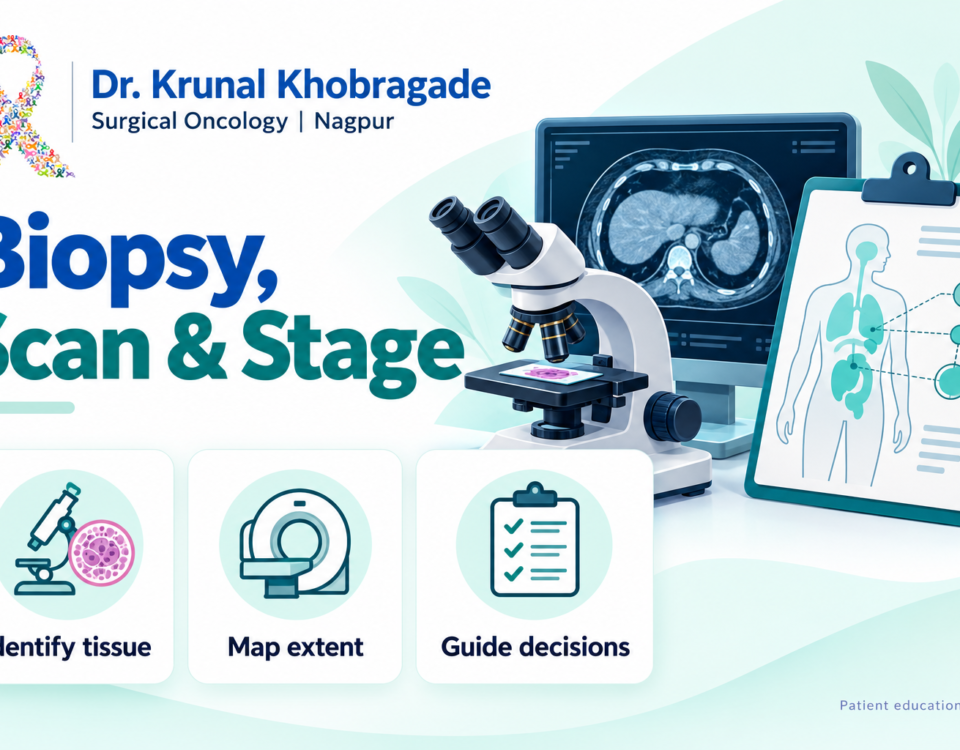
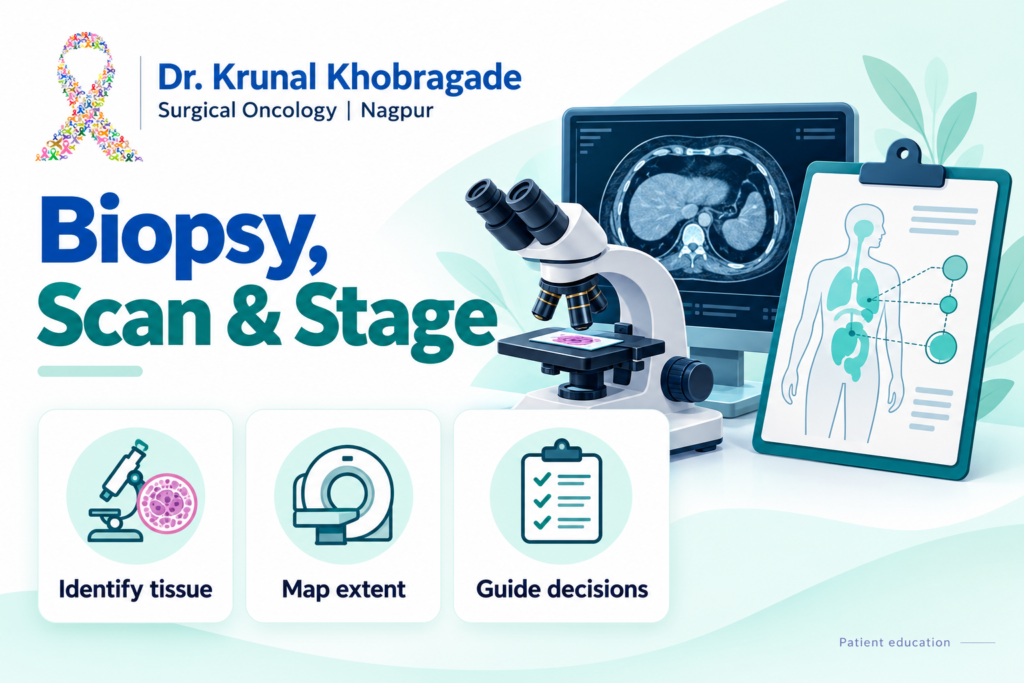
A scan may identify nodes that need attention, while examination of removed tissue can provide more specific information about the sampled nodes. Ask whether the report is describing a suspicion or a confirmed finding. Also ask which areas were actually assessed.
Why node findings matter after an operation
The team combines lymph node information with the rest of the diagnosis when discussing further care. Ask how the result changes the recommendation in your case. Do not assume that another patient’s medicine or follow-up schedule applies simply because both reports mention lymph nodes.
Use a short written question list
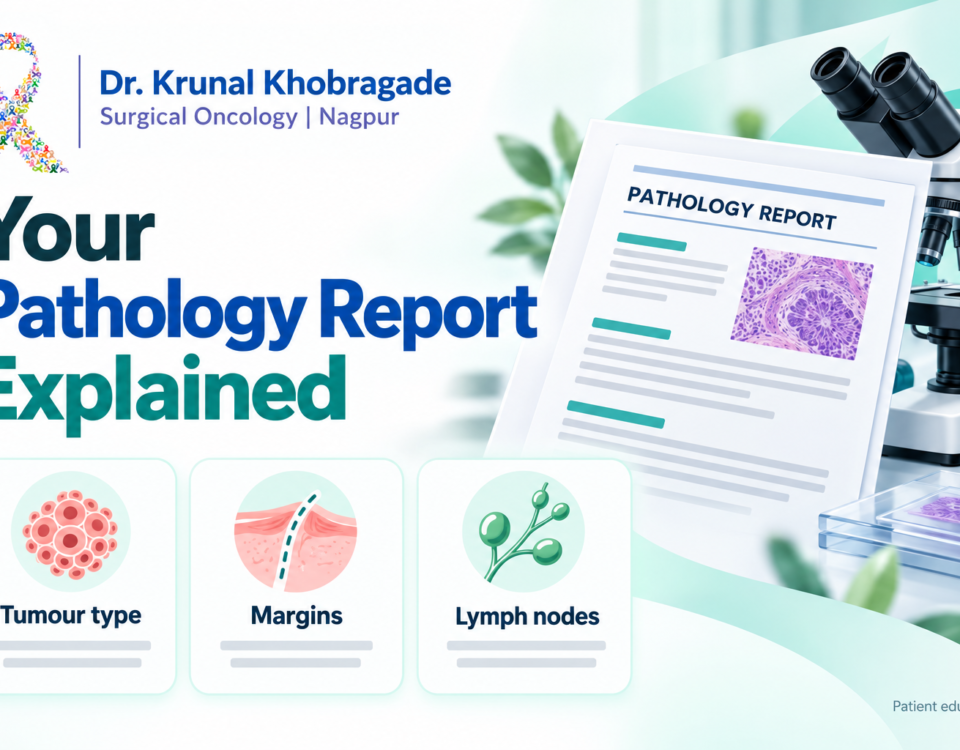
Bring the scan report and final surgical pathology together. Ask the team to identify the relevant node findings on each and explain any difference. Before leaving, confirm whether the assessment is complete and which clinician will coordinate the next treatment discussion.
Frequently asked questions
Does N-positive always mean stage IV?
No. Regional lymph node involvement and distant spread are different components of TNM staging. The stage group depends on the particular cancer.
Can I compare my node count with another patient?
It is more useful to ask how your own findings are interpreted for your cancer type and operation.
Discuss Your Reports With Dr. Krunal Khobragade
If you are seeking an individual opinion, bring your available reports and a list of questions to a consultation. Confirm the appointment location and arrangements with the clinic.
Related patient guides
Sources and further reading
Educational references checked 31 October 2026. Treatment decisions require an individual assessment.
Medical information: This article provides general education and does not diagnose a condition or replace advice from your treating team. Seek urgent medical care for severe or rapidly worsening symptoms.