


Publication target:
Blood in the Stool: Why It Should Not Automatically Be Blamed on Piles
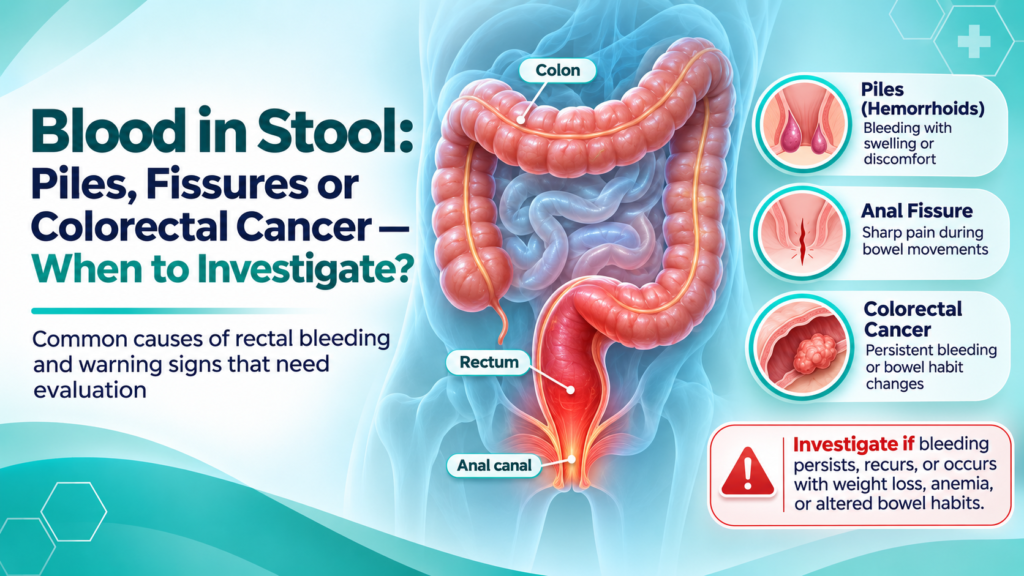
Blood in the stool deserves an explanation, even if you have had piles before. It can have several causes, and colour alone cannot identify the source. The aim of evaluation is to establish what is happening rather than assume either cancer or a harmless problem.
Why an earlier diagnosis may not answer a new symptom
A history of piles does not replace assessment of new, recurrent or changing bleeding. Describe the current problem in detail instead of only reporting the earlier label. Note any change in bowel habits, discomfort, unexplained weight change or unusual tiredness that accompanies it.
What information helps the clinician
Explain when bleeding started, how often it happens and whether blood is on the paper, mixed with stool or present separately. Bring a list of medicines, including blood thinners, and relevant previous reports. Tell the doctor about any family history of bowel cancer.
How the cause may be investigated
Assessment may involve examination and tests selected for the clinical situation. Colonoscopy is one way to investigate bleeding from the rectum or colon and can allow tissue sampling when needed. Ask why a test is recommended and what happens if symptoms continue despite an initial reassuring result.
When not to wait for a routine appointment
Heavy or continuing bleeding, fainting, marked dizziness, breathlessness or black tar-like stools need urgent medical assessment. If symptoms are severe, go to an emergency service. Do not stop prescribed blood-thinning medicines on your own; tell the treating clinician about them immediately.
Frequently asked questions
Does bright red blood prove it is piles?
No. Appearance is a clue for a clinician, not a diagnosis that can be safely made at home.
Does every episode mean cancer?
No. Several conditions can cause bleeding. Medical assessment helps identify the cause and decide which tests are appropriate.
Discuss Your Reports With Dr. Krunal Khobragade
If you are seeking an individual opinion, bring your available reports and a list of questions to a consultation. Confirm the appointment location and arrangements with the clinic.
Related patient guides
Sources and further reading
Educational references checked 31 October 2026. Treatment decisions require an individual assessment.
Medical information: This article provides general education and does not diagnose a condition or replace advice from your treating team. Seek urgent medical care for severe or rapidly worsening symptoms.